The Good Schools Guide

The Original Straight Talking Guide to Good Schools

On sale now
The Good Schools Guide 2010

Brighton College

Eastern Rd, Brighton, East Sussex, BN2 0AL

Tel: 01273 704 200

Fax: 01273 704 204

Email: registrar@brightoncollege.net

Web: Visit the website of Brighton College

Linked Schools: Brighton College Prep School 

Local education authority: Brighton and Hove

Brighton College, Brighton is a mainstream independent school for girls and boys aged from 11 to 19. Takes boarders.

Pupils: 780; 435 boys, 345 girls; 535 day, 240 board

Age: 11-18

Religion: C of E

Fees: Day £3946 - £5728; weekly boarding £7641; full boarding £9728

Open days: Four each year

The Good Schools Guide Review of Brighton College, Brighton, BN2 0AL

Our View

Happy and forward-looking town school with a wide and healthy spread of pupils and parents. Essentially a day school with boarders but the balance is shifting with the new head (boarding numbers are at their highest since 1931, with a new girls' boarding house opened in September 2009). Bright, energetic, robust pupils who like to keep busy will thrive here. The shy and retiring will be coaxed or tempted out of themselves by the energetic staff and/or the staggering range of opportunities. A good bet to become an even more impressive school in the future.

Headmaster

Since 2006, Mr Richard Cairns, MA (early forties), left Oxford with a first in history; his path to Brighton led him through a law firm in Australia, a Palestinian refugee camp, Stewart's Melville in Edinburgh, The Oratory in Reading and the deputy headship of Magdalen College School, Oxford. Now he is looking to buy a house in Bordeaux! Not a man to let the grass grow under his feet, he hit national headlines within a week of his arrival when he announced compulsory Mandarin and English literacy lessons for all pupils.

A strategic thinker – 'As a head you have to have ideas; will our leavers in 2015 be ready for the world?' – this head has cut the average number of GCSEs taken to 10 and rationalised the school day, so making more time for the extra-curricular activities now explicitly appreciated by universities.

For new parents, a young head is reassuring since they know their child will have efficient consistency throughout their time at school. Mr Cairns is keen to demonstrate his commitment to being an active, visible head through hand-written letters to pupils congratulating or comforting them on achievements or difficulties respectively. He is a passionate yet measured speaker and best one-to-one. At first meeting, he may underplay his effectiveness – 'I took over a school which Anthony Seldon had already transformed. My role is to take it to new heights'.

Refreshingly honest, 'You can do a lot when people don't know you,' Mr Cairns initially concentrated on getting the intake back to the record levels in his predecessor's heyday (applications up over 80 per cent since his appointment), yet keeps in touch with the pupils by teaching history to all year 9s. 'I will not allow bad teaching in my school. I want every lesson a child attends to be great, so that they leave enthused by what they hear and see and tell their parents about it in the car on the way home.'

He has breakfast with the prefects and invites sixth formers to dinner in his house every Thursday. The pupils love getting to know the head in this way (one of seven children, he certainly knows how to cope with a large dinner table) and relevant issues, ranging from divorce to cricket, often emerge casually.

Academic Matters

Great results and they are getting better: 76 per cent A*/A at GCSE; this is up with the best in London too. Since Richard Cairns replaced Anthony Seldon, results have soared from 77 per cent A/B at A level in 2006 to 95 per cent A/B in 2009 – the best results of any co-educational school in the UK. The Financial Times featured it in their list of the top five UK schools for academic progress over the last two years. Twenty-six subjects offered at A level. There is a 60/40 split arts/science at A level; biology (often combined with PE) and maths are particularly popular (the latter taken by 66 per cent of the pupils). Twenty-two per cent do four A levels all the way through, and in 2009, seven pupils got five straight As. Advice given to A level students is integral to their choices: there is a year group assembly on careers and outside speakers (John Major, Boris Johnson, Viv Richards, David Dimbleby, David Starkey, Jeremy Paxman ... ) visit in a Wednesday afternoon slot. Each department runs both a subject specific and a general Oxbridge activity which obviously pays off with a goodly number of pupils heading up to Oxford or Cambridge – it's cool to study hard here.

Languages are popular, not just through the Mandarin innovation – compulsory in the pre-prep since September 2007 and now a GCSE option with graduate students from Chinese universities to assist – but also Latin, French, Spanish and Greek. The burgeoning Mandarin option is now confirmed as a USP, with the school being awarded Confucius Institute status by the Chinese Government as a centre of excellence for the teaching of the language – the first such honour for a UK school. The school-wide recommendation of only nine GCSEs encourages a good balance between academic and extra-curricular.

All new pupils attend a literacy class and the dyslexia unit is nationally famous, specifically helping around seven per cent of pupils. English is taught within the centre (instead of timetabled French) for years 7-11 in groups no larger than seven, individual help available in sixth form. Taking complete control of English makes a huge difference, removes embarrassment and stress. School actively seeks out and welcomes the bright child with dyslexia. Entry based on recent EP report, CE assessment morning (observed in groups) and interviews by head and excellent head of centre. Approximately 160 taught in centre, from all three schools. Group work means that children become fantastically supportive of one another, concentration on remediation with younger ones and study skills with older. Time to finish tasks is not an issue – a good end product motivates students.

The bright but small library is in the main building and is used to provide quiet working space for the sixth form frees. The dedicated sixth form centre also has computers (Hotmail used more often than school addresses!) but is generally more social and noisy. Saturday morning revision classes on offer in the summer, mostly to boost confidence before exams. Class sizes average 18 up to GCSE; after GCSE, the average is eight.

Games, Options, the Arts

Year groups of 135 mean that someone will always be into the same thing as your child. Everyone has to do dance, PE and drama. House drama, house song and up to 15 different productions a year (including visiting companies, A level and GCSE performances and Commedia dell'Arte). Dance boasts 100 per cent A at A level and A/A* at GCSE in a state-of-the-art performing arts studio (outside classes offered to the community) and the Montague studio is five minutes' walk away.

The new arts building can only improve an impressively productive performing arts department – 142 options including sudoku and street jazz – documented in what looks like a glossy festival programme! Half the pupils have one individual music lesson per week, and there's a choir, orchestra, concert band and various chamber groups, with participation in the National Chamber Music Competition as well as tours to Prague and Moscow.

Sport is enormously important here, with most pupils taking part in games twice a week and, when we visited, 14 girls and boys playing for England in a variety of sports. Cricket, rugby, athletics, soccer and netball (seven out of eight county titles in 2007) are popular, and pupils sail at a local reservoir. Girls' cricket is conspicuously strong and coached by Clare Connor, former captain of the England Women's cricket team and ex-pupil, housemistress, head of PR and English teacher. Sussex captain, Chris Adams, is also on the staff. Squash courts, rounders, cricket, swimming-pool and rugby on campus and four more rugby pitches, three hockey Astroturfs in the extra sports field 15 minutes' walk away.

Community service is a vital part of school life – pupils visit elderly people and help disabled children, raise money for charity; some have visited a Romanian orphanage and there's a new link with a school near Nairobi for gappers.

Background and Atmosphere

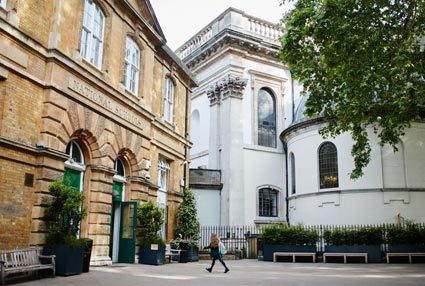
Compact campus in Kemp Town, just four blocks from the sea front. Imposing buildings purpose-built in 1840s by Gilbert Scott (designer of St Pancras Station and the Albert Memorial). The entrance halls, visitors' room and headmaster's office all give an impression of being part of a comfortable stately home. The plain and functional atmosphere of some of the boarding houses has been transformed in 2008 with a £1 million refurbishment which is drawing in new boarders. Boarding numbers are at their highest for 50 years.

Sited in the heart of the campest area of 'London by the sea', the school succeeds in being fashionable, practical and innovative – the lack of Saturday morning school means that everyone can have a full weekend and the chance to be part of the town instead of just being educated within it. This can put some parents off, since Brighton, like many seaside towns, has its fair share of drug addicts, drunks and loons. Most sensible local parents realise that their children are going to come to Brighton at the weekend anyway, and it is far better that they feel comfortable in their favourite cafés, bars and shops rather than loitering round Churchill Square ...

There is a good social mix here and the pupils are aware that they are privileged. The sixth form wear smart business-like clothes with some restrictions that are flouted when girls fancy tottering on high heels. They can drive themselves into school but must use street parking – new council charges are unpopular. The whole school benefits from a good sense of the outside world, whether it is through exchanges with schools in Russia, Africa, America and Australia, the perspective offered by pupils from an inner-city school, or the opportunity to twist their tongues round a year's worth of Mandarin Chinese. A link with Kingsford Community School in Newham, East London, began with the heads' discovery that they shared a desire to make Mandarin mandatory, and has grown into an HSBC sponsorship of three Newham pupils' education in Brighton for a year.

The chapel, just big enough for the whole school, is used three or four times a week for secular and multi-faith assemblies as well as Christian ones. Tradition still holds firm here (the oldest co-educational public school in Sussex) with the heads of school taking it in turns to sit alone in a pew, yet the chaplain is entertaining and eccentric ('He has to be to keep us interested – he got one of the 1st fifteen to rugby tackle him in front of the altar to illustrate a topic!').

Subsidised teacher accommodation and the attractions of Brighton mean that many of the staff are young, motivated and just as excited as being at this school as the sixth formers.

Pastoral Care and Discipline

As the head comments, this is 'a town school that is part of the real world, not apart from it'. At the beginning of every term he re-iterates the ground rules on theft, bullying and beyond: expulsion and no second chances is the line on drugs and the security at the school gates is tight, yet cheery.

Ten pupils to a tutor, 11 houses, two boys' boarding and one girls'; five boys' day and three girls'. Pastoral side has been developed recently with three separate section heads, two new houses and fourth one planned for expansion of weekly boarding. The head of the lower school and the headmaster meet every single registered pupil in their own school before they enter Brighton College. This reduces the fear about attending a new school and gives the pastoral staff a heads-up on what house and friendship group might suit a newbie. There is also a brand new health centre and counselling onsite.

Two options at meals and dishes containing wheat and peanuts are labelled. Food is also available in the Café de Paris – below the drama studio.

Pupils and Parents

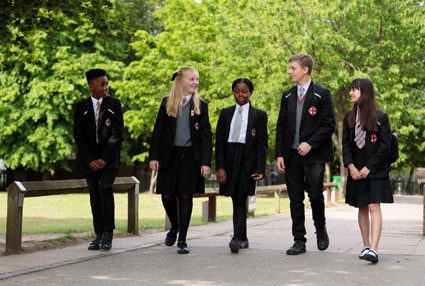
A great social mix from the children of butchers to highbrow TV presenters and a smattering of Conservative MPs; 24 per cent boarding, most weekly but seven per cent overseas (five per cent Asian). No Saturday school (weekly boarders can leave Friday 4pm, return Monday am) is popular with parents. School buses from Lindfield, Wivelsfield, Worthing, Angmering, Eastbourne, Horsham, Uckfield and Pulborough. Pupils are generally cheerful, enthusiastic, friendly and polite and have an easy, relaxed relationship with teachers.

Entrance

Around 30 pupils come all the way through from the pre-prep, another 35 or so from the prep. Seventy more from other preps including St Christopher's Hove (now run by Brighton College). Now adding extra capacity at 11 to cope with those who lose out in the Brighton state school ballots. Entry at 13, by CE if they come from a prep school; if not, after an assessment. Children who achieve 55 (used to be 50) per cent at CE are accepted, especially if they excel at music, sport or another activity. Around 70 new pupils at sixth form mostly from Burgess Hill, Brighton and Hove High School, Eastbourne, Hurst and Lancing. In top 10 of national co-educational schools, inclusive not exclusive.

Exit

A handful after GCSEs to local sixth form colleges, almost always for financial reasons. 100 per cent to university – 96 per cent to first or second choice. Around 16 per year to Oxford and Cambridge (18 in 2009). Famous Old Brightonians including Peter Mayle (writer), Lord Alexander of Weedon (lawyer and banker), Lord Skidelsky (historian and politician), David Nash (sculptor), Sir Michael Hordern (actor) and Jonathan Palmer (racing driver) testify to range of successful careers which may ensue.

Money Matters

At a recent open morning, parents were wondering about what extras Brighton College might offer to justify its fees being higher than rival local schools' despite its limited campus space - half an hour later they were totally sold, having been treated to a Commedia dell'Arte take on the drama, a booty wiggling synchronised dance by nine teenage girls and the heads of schools speaking about the high quality lessons. Many parents struggle to pay the fees but bursaries and up to 20 academic awards (5-50 per cent off basic fees), one big music scholarship (up to 50 per cent off), art, drama, dance, sport and all-rounder awards (up to 25 per cent off) and a DT scholarship (up to 15 per cent off) are available at 13+. Extras include £195 per term per musical instrument, £45 per night occasional boarding, £65 for weekly boarders remaining over the weekend and £545 per term for the use of the dyslexia support centre.

In depth downloadable pdfs available for • GCSE • Alevel/IB Use data analysis to compare schools

Exam result analysis

Features

Show/Hide

Curricula

Curriculum features

Any SEN attributes, are shown in the box below

SEN

Show/Hide
Load SEN Questionaire

Attributes

  • Has SEN unit or class Info
    A mainstream school which has either resourced provision or a unit for children with identified special needs that require different, or additional, support for some, or all, of the school day.

School's self-portrait

Show/Hide
The success of our pupils academic performance is the result of reducing classroom lessons to ensure pupils have plenty of time to enjoy sport, drama, dance, the visual arts and other activities. Subscribers to The Good Schools Guide may use Qlikview to compare the results of this school with others.
Please log in or register to leave a comment.

busy

If you are a representative of Brighton College, Brighton, BN2 0AL and wish to add or amend the above information please click here.