Living in Hong Kong: an expat guide

What to expect when moving to Hong Kong
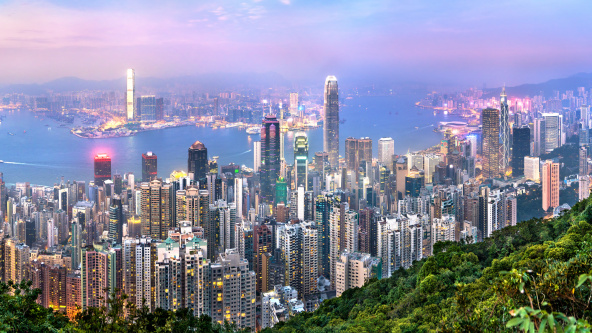
Hong Kong really is the city that never sleeps, with nightspots having no legally enforced closing time and the infamous streets of Lan Kwai Fong buzzing all hours. For those with young children, wild nights out play less of a role, but readily available (and often live-in) help means that the good times keep rolling, earning Hong Kong the nickname of the ‘city where you never grow old’. Children, meanwhile, vote resoundingly for the sea, the weather, and fun on the water. And it is true. So much of Hong Kong’s magic comes from the fact that it is an island.
Hong Kong means ‘fragrant harbour’ in Chinese and while most scorn the word fragrant (as you would probably get cholera if you tried to swim in it), it is still a breathtaking harbour, both day and night. But there are also beautiful beaches where you can swim, even in mid-winter, and without a wetsuit!
‘Junks’ (flat-bottom boats, unique to Hong Kong), with speed boats and wakeboards in tow, will be out all year round. Days out on junks used to be a great treat that came with many people’s jobs, and although that is no longer the case (as the days of the expat package are long gone) they are still readily available to hire. Many a day can be spent heading out to Po Toi or Lamma for seafood or venturing out further to the famous Millionaires Beach.
The best-kept secret of Hong Kong, however, must be the hiking. Whether tackling The Dragon’s Back on a Sunday and ending up in Big Wave Bay for noodles, burning calories up the famous ‘Twins’, or entering an organised challenge race, there are hiking and trail running opportunities for everyone.
How bad is the pollution in Hong Kong?
Hong Kong is paying the price for all the development that has taken place on both sides of the border and is still frequently covered in a depressing layer of haze despite the government finally waking up to the consequences of this and starting to make some sensible policy changes.
Electric cars are more popular here than in most other cities (Teslas are the ultimate status symbol) and chargers are available in most shopping centre carparks. However, there is still a long way to go to catch up with London and other cities, especially when it comes to recycling and reducing plastic use. If you are interested in environmental action, there are lots of great lobby groups and initiatives to get involved with.
What language do they speak in Hong Kong?
English was the sole official language during the British colonial era and up until 1978. Today, it sits alongside Chinese with street signs in both languages, and both are used in daily business. You will find that many locals speak very little English, (especially taxi drivers, shopkeepers, etc) but if you are patient and willing to use some sign language, it is pretty easy to get around.
For those wanting to learn Cantonese or Mandarin at a serious level, HKU (Hong Kong University) offers a two-year full-time course, which is the minimum you will need to communicate effectively, and longer for business level. However, any attempt at speaking is welcomed by locals, especially if you enjoy shopping in China.
Where to live in Hong Kong
Unlike those singletons arriving in their early 20s, expats with families rarely live right in the city. Most of the family-friendly accommodation is out of town, yet the city is often only 10 to 15 minutes away, ensuring that it is always accessible.
Hong Kong really is the city that never sleeps, with nightspots having no legally enforced closing time and the infamous streets of Lan Kwai Fong buzzing all hours.
While some intrepid souls love living in ‘the dark side’ of Kowloon, there are three key areas that expatriates tend to gravitate towards: the south side of the island including Stanley and Pokfulam, the Peak, and Sai Kung and Clear Water Bay in the New Territories. All of them have their pluses.
Living on the Southside
Most people go for Southside (Hong Kong Island) to be near the heart of the action, as well as being an easy-ish commute for those with offices in Central. Whilst the Stanley Road is breathtaking, it can also be slow, although the MTR (Hong Kong’s metro system) from Ocean Park to Admiralty significantly helps. Beaches are aplenty on the south side and Stanley has a great atmosphere and community spirit although beware of weekend traffic and high rents. Americans and the French love Stanley and Tai Tam due to their proximity to HKIS (American) and FIS (French) schools. And where the French go, delicious bistros and chic clothes shops follow.
Living in Pokfulam
Pokfulam is the perfect option for those wanting a shorter commute — eight minutes in a cab to IFC (International Finance Centre), yet it also offers exceptional hiking and sea views. Some apartment blocks lead right out onto the country park, with a trail up to the peak and the rest of the ‘Hong Kong trail’ — great for children and dogs. Hong Kong University is the main landlord here (big, fun blocks), and offering easy proximity for those wanting to study Chinese (or other courses). This is also where the British International School (Kellett), Wycombe Abbey School Hong Kong, ISF (a very reputable Chinese/bilingual school) and two excellent ESF (English Schools Foundation) options are located.
Living in the New Territories
Others adore the fresh air and friendly atmosphere (not to mention lower rents) of Sai Kung and Clear Water Bay. Those with children at Kellett Kowloon Bay, the Australian School, Shrewsbury International School HK and HKA amongst others have a good school run from here. Central can be reached in about 45 minutes to an hour. Many people love it for the extra space, and lots of the houses have stunning views over the sea. Sai Kung Country Park is also an absolute gem, both on land and on foot. Some lucky souls manage to acquire weekend houses in the park.
Living on The Peak
The Peak is very expensive and subject to the cloud, mist, and fog that can descend in the humid summer months. The desirability of the Peak has somewhat waned since the introduction of air-conditioning (it used to be the only ‘cool’ place to live) but still retains its status as the place to live amongst the very wealthy local and mainland population, with its wonderfully luxurious houses, as well as the much loved Peak (ESF Primary) school and the highly academic German Swiss International School. When you are deciding where to live, schools are a major part of that consideration. While many schools have bus services, they do not go to all areas, are often expensive and can result in a long commute for very young (and tired) children. Community spirit and friendships are often school-based. We cannot emphasise this enough.
Living on Lantau or Lamma Island
Lamma Island is great for those on a budget (with ferries to Aberdeen for schools) and Lantau — close to the airport — is wonderful for both weekend houses or full-timers. Discovery Bay (on Lantau) has lots of fans, thanks to a fast ferry to IFC and great schooling options, but it’s a bit too resort-like for some (especially with the nearby HK Disneyland).
Finding an apartment
Finding a home in HK can be dispiriting, with most having very limited space and dreadful bathrooms. Try to remain positive. Once you have rented your apartment, there are many fantastic furniture shops, not to mention a variety of outlets ‘over the border’ ensuring that in no time, your house will be a home.
When you’re looking at apartments, keep an eye out for children’s toys, bikes, and scooters — sure indicators of a great block that will provide a fantastically social community for children and parents alike. Visit at different times of the day, so that you can see the neighbours in situ. If you go to a reputable estate agent they should help you find such communities near your school.
Getting started in Hong Kong
The first thing to do when you arrive is to get your Hong Kong identity card also known as a HKID. It’s a smart card which incorporates personal information with immigration data and allows you to clear immigration and customs using the automated kiosks. Applications should be made within 30 days of arrival.
Setting up utilities
Getting utilities sorted is reasonably straightforward and any housing agency will point you in the right direction for phones, internet, television, electricity, and gas. For any questions regarding setting up a home and life in Hong Kong, the very active Facebook groups ‘British mums in Hong Kong’ and 'Hong Kong Moms' offer a wealth of useful information.
Finding home help
Many families take advantage of the availability of domestic help, as babysitters are few and far between. Supermarkets, big apartment blocks, word of mouth, and agencies are great places to start to find someone.
Working on a dependent visa
Hong Kong can offer a wonderfully privileged lifestyle and when you add in that luxury of full-time domestic help, it can offer a great social life and for many, the chance to work. Dependent visas allow you to work without any red tape, although finding employment can be increasingly tricky without Mandarin or Cantonese skills. Those who want to set up their own businesses can open a sole proprietorship business or limited company very easily, too.
Health insurance
Most foreigners use private health insurance, although you will have full access to the public system too. The local hospitals are very good but bedside manner is often lacking. The main private hospitals to use are the Adventist on Stubbs Road, which has an excellent A&E, and The Matilda on the Peak (a wonderful place to have your baby).
Setting up a bank account
Opening up a bank account is pretty straightforward in Hong Kong. You don't need to be a permanent resident though you will need to visit your new bank branch to present yourself any documents required, for money laundering regulations. HSBC (Hong Kong and Shanghai Banking Corporation) have a large presence here and if you already hold an account with them elsewhere you may be able to open a HK-based account through its app.
Day-to-day living in Hong Kong
Navigating the streets of Hong Kong by car or foot can be a challenge, but try not to be fazed and you will get there. Hong Kong is quite small and once the winding roads have started to make sense to you, be brave and get yourself behind the wheel of a car. Google Maps works brilliantly on Hong Kong island. You will need to get your home driving licence transferred to a Hong Kong licence (you keep both) if you wish to drive. This is a surprisingly straightforward process.
New cars have quite a hefty tax, whilst second-hand ones are good value (locals tend to replace their cars very frequently, so lots are up for grabs). If you don’t fancy driving yourself, you can employ a driver
Public transport
Public transport is also good: the MTR network is extensive and efficient, buses and trams are fun but not always very speedy, the Star Ferry is magical, and taxis plentiful and cheap. Green and red minibuses are generally fine, you can stop them wherever is safe to do so, fares are fixed and speed limits have been introduced to make them safer
Clubs and sport
It is a little-known fact that Hong Kong is mostly made up of country parks, which offer spectacular hiking and trail-running opportunities. While lots of people have no gardens or if they do they are the size of postage stamps, it is possible to join clubs with swimming pools, tennis courts, bowling alleys, etc, and all organise after-school sport and activities for children, even for non-members. Many of the clubs offer sporting memberships — if you are a keen footballer, cricketer, tennis player, or rugby player, this can be a great way to meet people. Your sporty children can join Sandy Bay (Pokfulam) and Valley Fort rugby clubs (various Southside locations), culminating in playing during the famous Rugby Sevens (a massive sporting and social event here).
Visiting China
Living in Hong Kong will also provide you with access to China. Trips across the border to Zhuhai and Shenzhen (AKA ‘Shenners’) are great fun and you always come back laden with goodies. Getting a multiple Chinese visa in advance is a good idea but you can usually get them at the border (check first as it is nationality dependent). Recently introduced travel cards allow long-term residents of Hong Kong (who are not Chinese) to apply for a five-year travel permit.
If you are a business traveller you can get an APEC card, which means queue and visa-free travel all over Asia. There is, of course, far more to China than what is immediately across the border: Beijing and Shanghai are must-sees, Macau is a one-hour ferry ride away and is the ‘Las Vegas’ of Asia. The casinos are not to everybody’s taste, but there are also great shows, waterparks, and hotel deals for a family weekend away. There is also the 55 km Hong Kong–Macau–Zhuhai bridge and the high-speed train, so there’s no excuse not to set your sites further than Hong Kong.
The last word
Hong Kong has to be one of the most vibrant places on earth. It is a city with energy, grit, glamour, and a huge personality; a cultural melting pot, rock 'n' roll, roller-coaster of a place. When you leave you will have friends dotted all over the world and a dim-sum-shaped space in your heart. Make the most of it and enjoy!