Living in Madrid: an expat guide
What to expect when moving to Madrid
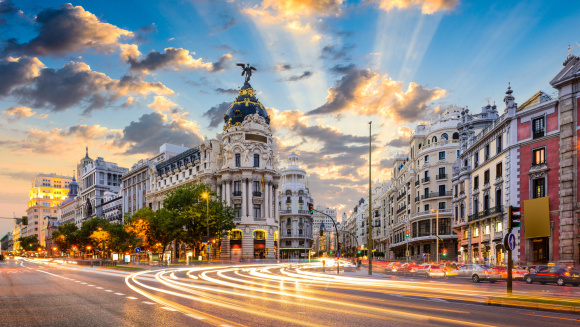
Moving to Madrid means being part a warm, family-friendly city filled with culture, history and modern amenities. As Spain’s capital, it offers excellent public services, a high standard of healthcare and a variety of international schools and different curricula. The city’s central location, combined with its high-speed train network, makes exploring Spain very convenient.
Madrileños are known for their pride in their city. De Madrid al cielo is a well-known saying which translates to ‘from Madrid to heaven’ and expresses the idea that after experiencing the beauty and vibrancy of Madrid, the only thing better is heaven itself.
Language
Madrid is a cosmopolitan city with a growing number of locals who speak English, particularly in business, tourism and international schools. However, outside these settings - such as in local shops, markets, healthcare facilities and government offices - Spanish is often needed.
There are ample opportunities to learn Spanish in Madrid. There are numerous specialised centres and academies to learn Spanish accredited by the Cervantes Institute (the oficial language body created by the Spanish government). There are many other private centres too and language exchange meet ups (intercambios) are also popular and a great way to meet people.
Eating habits
Be aware that mealtimes follow the traditional Spanish schedule, which is later than in many other countries. Lunch (la comida) is considered the most important meal of the day and is typically served from 2 to 4pm. It usually consists of multiple courses: a starter (like soup or salad), a main dish (often meat or fish) and dessert or fruit. This is what is offered to children at school (no packed lunches here) and restaurants offer a menú del día - a reasonably priced three-course meal. Dinner (la cena) is often a smaller, more casual meal and is usually eaten between 9 and 11pm. Very often restaurants don’t open before 8pm and don’t count on restaurants getting busy until 10pm. Expect weekend lunches with family and friends to last into the evening.
Weather
Madrid enjoys a lot of sunshine throughout the year, making it an appealing destination for those who appreciate sunny, dry weather. However, summers can be very hot, often reaching over 35°C in July and August. You’ll notice the exodus of Madrileños in August who like to spend holidays by the sea. Winter in Madrid is mild compared to northern Europe but can still feel chilly due to its inland location and altitude of 650 metres above sea level. Daytime highs average 10–15°C, while nights can drop to around 0–5°C.
Where to live in Madrid
With so many factors to consider, and so many different options available, choosing the best area to live in Madrid can be a difficult decision. Budget, schools, commute, vicinity to outdoor space, activities and restaurants will all play a part.
Living in the city centre you will be able to experience all the hustle and bustle that Madrid has to offer. Everything is within walking distance or a short metro ride. Apartments, however, tend to be smaller, with limited access to outdoor space and are definitely more expensive.
Housing in the suburbs is generally more affordable, offering better value for money. Suburban homes have larger living areas, gardens, or access to green spaces and often have a pool (communal or private).
There are good schools (public, private and international) all over Madrid so if you set your heart on one in particular, your choice of school may well be the deciding factor.
Idealista is the most popular website for housing but be aware, the rental market in Madrid is fierce and many people will use a relocation agency to help them find a suitable property.
City centre neighbourhoods
Upmarket city centre neighbourhoods include Chamberí, Salamanca and Retiro. Chamberí, just north of the centre, exudes a traditional Madrid charm, with tree-lined streets, beautiful historic buildings and a relaxed atmosphere compared to more bustling parts of the city. The neighbourhood is a blend of old-style apartment blocks and more modern developments. It’s home to Plaza de Olavide, a charming and relatively lesser-known square with a mix of local cafés, restaurants and small shops, adding a touch of local life and charm.
Named after the famous Retiro Park, the Retiro neighbourhood offers a more residential feel while being just a short walk from the city’s cultural heart. Easy access to one of Madrid’s largest parks makes it a popular choice for families. The park has wooded footpaths, fountains and a boating lake.
One of Madrid’s most exclusive districts, Salamanca is home to some of the city’s most affluent residents, including diplomats, business leaders and celebrities. The area is characterised by wide, tree-lined streets, elegant buildings and upscale amenities.
Reputable international schools in the centre include SEK International School - Santa Isabel, The Global College, Maxwell School and Brewster Madrid.
Chamartín, located to the north of the city centre is well-connected to central Madrid and other parts of the city. Chamartín is home to several top international schools, including Hastings School and International School of Madrid which makes it attractive for expat families. Conde de Orgaz in the Hortaleza district, northeast of the city centre, is known for its spacious homes, green surroundings. It’s popular with the internationals community, especially French speaking families as the Lycée Français is located there.
Suburbs
Located just 15 kilometres north of Madrid, La Moraleja is one of the most exclusive suburbs. It’s known for its stunning homes, gated communities and lush green spaces, attracting high-profile residents (politicians, sports stars and TV celebrities) but often beyond most budgets. It’s home to a whole host of top-tier international schools including International College Spain, The Scandinavian School of Madrid, Colegio Suizo and King’s College The British School of Madrid.
Twenty kilometres northwest of the city centre, Pozuelo, Majadahonda, Aravaca and Las Rozas offer spacious homes, great schools and a suburban charm ideal for families. The American School of Madrid and Kensington school are just two of the many international schools in the area. The area is well-connected to Madrid via commuter trains, metro and motorways. There are abundant green spaces like Casa de Campo, the largest public park in Madrid and a variety of sports facilities.
Further to the north, Alcobendas and San Sebastián de los Reyes provide more affordable housing options, fantastic playgrounds (themed Parkes inspired by space, a ship and an anthill) and a strong expat presence, making them appealing for international families.
Getting started in Madrid
Starting a new chapter in Madrid is exciting, but it’s important to be prepared for the practicalities of life in this lively city. The bureaucracy is as bad as people say it is - there’s no way of getting around it. There are several administrative procedures that need to be completed when you first arrive and many people choose to work with a professional who speaks the language and is familiar with the processes. This certainly makes for a softer landing, as dealing with Spanish bureaucracy can be very stressful.
Residency and visas
If you're moving from outside the EU, you'll need a visa to live and work in Spain. The process varies depending on your nationality and reason for moving (work, family, studies). Be sure to apply in advance and gather necessary documents like proof of employment or financial means. If you are moving here with a company they will more than likely sort out this type of admin. Many expats who make the move to Madrid as a lifestyle choice rely on the digital nomad visa which was introduced in 2023.
Getting your NIE and TIE
The NIE is a foreign identity number (número de identidad de extranjero) assigned to every foreigner who comes to live or work in Spain. It is nothing to do with residence and it is not a work permit. You’ll need a NIE for transactions such as buying and selling property, buying or selling a vehicle, opening a resident’s bank account, completing tax procedures etc.
If you’re an EU citizen you’ll also need a certificate of registration if you wish to stay in Spain for more than three months. And if you are a non-EU citizen (the British are included this) who wants to stay in Spain more than six months, you’ll need a TIE, a physical identity card. The NIE appears on both the certificate of registration and the TIE.
To apply for a NIE you’ll need an in-person appointment and here-in lies the tricky part - they are nigh-on impossible to get hold of! The process of getting a NIE is not complicated but it is very time consuming. So we recommend you use the services of a professional company to help you - and there are many reputable ones in Madrid.
Empadronamiento
Empadronamiento (also called padrón) is a city hall registration to inform the municipal register where you currently reside so you’ll need to reregister if you move from one municipality to another. Registering is compulsory and gives the registrant the status of local resident. Once you have your padrón you will have access to public healthcare and state education. Registering is straight forward and can be done at your local ayuntamiento.
Healthcare
Spain offers both public and private healthcare. As a resident, you can access public healthcare through the Spanish social security system, but many expats opt for private health insurance for quicker access to services. AXA, Cigna, Adeslas and Sanitas are popular choices.
Banking
Opening a Spanish bank account is necessary for paying rent, utilities, and receiving salaries. Most banks will require proof of address, your NIE and proof of income. International banks like Santander and BBVA also have English-speaking staff.
Day to day living in Madrid
Madrid’s public transport system is extensive, efficient and affordable, with information readily available in English. The fully automated ticket machines can be accessed in English and several other languages. Operated by the Consorcio Regional de Transportes de Madrid, the network includes metro, buses, commuter trains (Cercanías) and trams, all integrated under a single fare system for convenience.
The Madrid Metro is one of the largest in Europe, with 12 main lines and additional branches connecting nearly every corner of the city. Trains are frequent, modern, and clean, making the metro a popular choice for locals and visitors alike. It operates from 6:00 am to 1:30 am.
The EMT buses cover routes not served by the metro and are a reliable option for getting around, especially late at night when the metro is closed. Special express services, such as the Airport Express, connect key areas efficiently. Commuter trains, operated by Renfe, connect the city centre with suburban areas and nearby towns.
Public transport is affordable, with various ticket options, including single fares, 10-trip tickets and monthly passes. The Madrid Multi Card or Personal Transport Card (Tarjeta Transporte Público) is a rechargeable card that simplifies travel across all modes of transport. Children under four travel free.
Local fiestas
Local fiestas are an integral part of life in Madrid, deeply rooted in the city’s culture and traditions. These celebrations bring communities together, filling neighbourhoods with music, dancing and a general festive spirit. Some of the most notable include San Isidro, the city’s patron saint festival and La Paloma, celebrated in the traditional La Latina district. These events are an opportunity to experience the real Madrid’s with processions, street parties and traditional costumes. They also showcase the Madrileños' love of socialising.
Public holidays
Each autonomous community in Spain is designated 14 public holidays per year - including the nine national ones. If a public holiday falls on a Sunday an alternative date is designated. When the Spanish have a public holiday that falls on a Tuesday or Thursday, it is quite common for employers to give their workers the Monday or Friday off (or for employees themselves to take the Monday or Friday off), and for schools to give extra days off and make a long weekend of it. This is known as a Puente (bridge) and means there is ample opportunity to explore surrounding areas of Spain or other European cities throughout the year.
Sport
Madrid is passionate about sport and offers plenty for fans and participants alike. Football reigns supreme, with the city home to two of the world’s most famous clubs: Real Madrid and Atlético Madrid, whose matches attract devoted fans from all over the globe. Padel is the second most popular sport in Spain after football and Madrid alone has over 2,000 courts to choose from. Not only it is a popular sport, it’s also incredibly sociable and a great way to meet people.
Beyond football and padel, Madrid supports a wide variety of sports, including basketball, tennis and cycling. The Mutua Madrid Open, a key event on the professional tennis calendar, is held annually at the Caja Mágica.
Madrid provides excellent facilities for running, cycling and fitness. The city’s many parks, like Casa de Campo and Retiro Park, are popular for outdoor exercise, while local gyms and sports clubs cater to all levels and interests.
Meeting new people
People in Madrid are generally warm, friendly, and sociable, reflecting the welcoming spirit of Spain. Madrileños are known for their openness and love of conversation, making it relatively easy to strike up a chat or ask for help. It’s a bustling city but people take time to socialise, whether over coffee, tapas or at the many lively plazas.
There are many in person meet-ups across the city. INC Madrid (International Newcomers Club of Madrid) is popular and Costa Women - connecting, inspiring and supporting women all over Spain - have a splinter group in the capital. Join them for regular meet-ups and nights out. IWBB (International Women Building Businesses) also hold regular meet-ups - check out their very active and supportive Facebook group too.
Expats in Madrid is a Facebook group of over 30,000 English speaking internationals who share information about life in Madrid. Advice is free flowing and you will find an answer for literally everything. It’s worth joining groups such as this before you arrive in Spain.
The last word
Madrid offers a unique mix of traditional neighbourhood charm and cosmopolitan energy. This combined with excellent public transport, quality schools, cultural diversity, innumerous events and festivals and a central location for exploring Spain, it’s a city that offers something for everyone. The city provides endless opportunities to savour life and the warm sociable nature of the Madrileños make it easy to feel welcome here.The full saying: De Madrid al cielo, y en el cielo, un agujerito para mirarla (from Madrid to heaven and in heaven, a little hole to keep looking at it) poetically sums up Madrid’s unforgettable allure, for locals, expats and visitors alike. It’s not a place you forget easily.