
Living in Valencia
What to expect when moving to Valencia
Valencia is a coastal city on the southeast coast of Spain; a few hour’s drive down from Barcelona and just north of the other major cities in the Comunidad Valenciana, Alicante and Benidorm. Valencia was one of the many Spanish cities conquered by the Moors, and then returned to Christian hands under El Cid’s rule, leaving an amazing blend of Moorish and ancient Spanish architecture, names and food. It has become more international over just the last five years, welcoming already-settled foreigners tired of the bustle and expense of Barcelona, and Spanish who have become jaded with Madrid and attracted by balmy weather, the beach and an active lifestyle.
Valencia is the home of paella and it is taken extremely seriously (it’s best to learn a few things about this infamous dish before opening your mouth about it to a true Valencian). It is also the home of Fallas, a booming, pyrotechnically outrageous three-week festival in March that is hard to hide from in any pocket of the city itself. Valencia is also the birthplace of the agua de valencia, a refreshing drink that tastes like orange juice but hides gin, vodka and cava - not for the faint of heart! A love of food and culture sits at the heart of every Valencian.
Where to live in Valencia
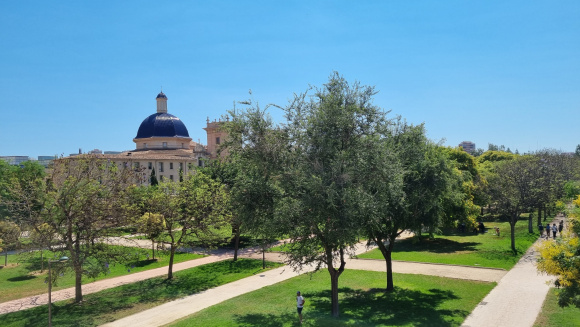
The city ‘centre’ is framed to the north by the ring of the green Turia park, and fitted snugly into this loop is the old town, where churches and landmarks meet vermouth bars and tourist tapas joints. Across the park, the old-fashioned neighbourhoods such as Benimaclet and Campanar are booming, becoming smarter and younger as people move away from the high prices in the city centre.
In the very middle of the city is the Ayuntamiento, the Valencia town hall, once cut through with a busy main road but now a broad and breezy pedestrian plaza for meeting friends, skateboarding kids and enjoying seasonal festivities. The centre also hosts neighbourhoods such as Colon, a chic and moneyed part of town, a great place to people-watch both adults and children in their Sunday best after Church finding a spot for a family paella. Many of the most sought-after neighbourhoods are found south of Colon, across the large Gran Via artery road, such as trendy Rusafa and up-and-coming Monteolivete.
The suburbs
As with any city, there are numerous suburbs, outer towns and villages with which to choose from. To the north the space and the land is bigger, with many larger villas with gardens on offer and access to the rugged and more remote mountains inland of Valencia. This is where you will find a number of the international schools, including the British curriculum school Caxton College, and the American School of Valencia. To the south of the city, a sprawl of different urbanisations offers any level of community you could wish for, with easy access to the wetlands of the Albufera natural park (where you can spot flamingos avoiding winter chill between January and March) and the beaches of El Saler.
Getting started in Valencia
Everything here is easier with an NIE - a document ID number assigned when registering with the police. The next thing to get your hands on to make life easier is a public transport card, especially the SUMA, which covers the extensive EMT bus network and the smaller (but expanding) metro system.
With the proliferation of foreigners in the city, more and more bank officials are beginning to speak English, but it is a different proposition in government offices, where the main language is often the local dialect, Valenciano, plus Castellano. Thankfully, an entire cottage industry of helpers, translators and gestors at different levels of ‘officiality’ has grown around this need, and it is usually very easy to find someone to help you with tricky bureaucratic appointments.
Car parking
Parking is a precious, rare commodity, not just in the old city centre but even in the neighbourhoods away from the city centre. If you are renting or buying in the city itself, make sure to take any offer to rent or purchase a car parking space in a garage - and check if the streets around your home require a permit to drive through or park on. The city is attempting to become fully adapted for continuous bike journeys in the coming years, so spaces are disappearing and punishments for using cars in particular areas without permission are swift and uncompromising.
Day to day living in Valencia
Valencians are an active bunch. At the weekend, a walk through the Turia park from north to south will take you past classes of yoga, Pilates, boxing and HIIT, softball and baseball games (on an official, if small, diamond), meets at the athletic track, rugby practices, basketball games from ad-hoc to league-organised, tense football matches and friendly kickarounds, American football, and a dedicated running track that snakes right through the middle, always filled with runners who like the friendly climate and flat terrain. At the beach, everyone from young to old is promenading down the beachfront, either on bikes, rollerblades, skateboards or their own two feet. The beach also offers great wild swimming opportunities, a number of surf and stand-up paddleboard clubs and rentals, and sunset yacht cruises.
The Valencian half and full marathons are famous on the world running stage, and have been the location of a number of running world records. There is a well-placed professional basketball team, and two major football teams: Valencia CF play in the top league LaLiga, while Levante UD play in the Segunda División. Because of these accolades, plus the amenities available and 300 days of sunshine, the city is always out in the fresh air doing, or watching, something.
Cafe culture
That’s not to say that Spanish terrace culture isn’t also popular. Neighbourhood bars and cafes are the hubs of the social world, where everyone from tiny babies to ninety-year-olds can be seen having a coffee, vermouth or some tapas. Bars and cafes are often relaxed and informal and placed near children’s playgrounds so that adults can catch up with friends and family, and kids can entertain themselves safely nearby. Fine dining experiences are becoming easier to access thanks to local chefs, such as Ricard Camarena, bringing Michelin stars to the city.
Speaking Spanish
Speaking some Spanish will make life much easier in Valencia, although complete fluency is not needed. Valencians are notoriously friendly if you give Spanish a go, and many of the service staff in restaurants and bars speak English or are happy to help you understand any way they can.
The last word
Although the popularity of this charming city has raised prices, its many positives of good weather, outdoor lifestyle and strong community have made it an attractive place for families looking for a less hectic, more relaxed way of life. Valencia is quite new on the international scene as a place for foreigners to settle, but it has become a popular option very quickly, for good reason.