

 Ages
Ages 


Time has not stood still at Shrewsbury House: the best traditions have been maintained but this is very much a school looking forward, not back. The boys have a genuine sense of pride and are articulate, polite and confident. What appeared to be incomprehensible – that parents living in Fulham would bus their sons to Surbiton and back each day – makes complete sense now. It could be a growing trend.

Why read our school review?
Unlike other websites, schools can't pay to be included in The Good Schools Guide. This means our review of this school is independent, critical and fair, and written with parents' best interests at heart.

Overview & data
- Pupil numbers
- 323 ·
- Religion
- None
- Fees
- £19,170 - £27,558 pa
- Local authority
- Royal Borough of Kingston upon Thames Council

Headteacher
Executive Head
Mrs Joanna Hubbard
Since 2021, Joanna Hubbard, previously head at The Rowans, Wimbledon. Initial trepidation (pre-prep, rather than prep school, experience and a strong, charismatic predecessor) was quickly dispelled and nobody seems to have anything other than praise for her, ‘She’s marvellous,’ said one parent. ‘Incredibly compassionate and caring,’ said another. Generally regarded as professional and purposeful, she brought with her increased touchy-feeliness but not at the cost of academic rigour or the best of the school’s traditions.
Educated at Lady Eleanor Holles, degree from University of London, postgrad qualifications (PGCE and SEN diploma) and, more recently, a master’s degree in education suggest an executive head who firmly believes that learning should be ongoing, even for the grown-ups. A former professional sports coach and teaching experience at both primary and secondary level both big plusses. Two (now adult) children attended local independent schools so parents feel confident that she understands the system and can give advice based on both knowledge and experience.
On the gate each morning, she takes pride in knowing each boy’s name (no mean feat) and is genuinely interested in them, their achievements and their wellbeing. Parents are kept at a bit of an arm’s length in terms of informal, daily interactions but there are plenty of other opportunities to get to know her. The sofas in her office are very welcoming.
Generally regarded as professional and purposeful, she brought with her increased touchy-feeliness but not at the cost of academic rigour...

Entrance
From September 2025, Shrewsbury House Pre-Prep will be based at Shrewsbury House, making it an all-through school from 4-13. The pre-prep will be fully integrated and referred to as ‘younger years’.
No scary entrance process at 7+ – candidates are invited to spend a day at the school and English and maths are assessed but a raft of other activities and lessons (including team building, sports and music) diffuse the pressure. Approximately 100 sit for 60-64 places (four form entry with 15 to 16 in a class). They’re looking for boys who will take advantage of the opportunities and thrive.
- Open days
- September

Exit
Only a small number leave at 11+. Vast majority stay to take advantage of the senior years and at 13+ around half head to boarding schools. Reed's and St John's were the most popular destinations in 2025, followed by Epsom College, Cranleigh, Harrow and RGS Guildford. A number of other selective independent schools all attract a handful too. Pupils secure a number of scholarships each year (31 in 2025).

Latest results
There are no results to show for this school. Find out more.

Teaching & learning

Learning support & SEN

Mobile phone policy
A clear mobile phone policy is a really important part of modern schooling. This school has provided us with their policy.
Mobile phone policy
 Provided by the school and not part of our review
 Phones to be handed to driver, when embarking the bus. On arrival at school, these are retained by the senior deputy head during the school day. They may only be used to make calls to parents/carers regarding alterations to travelling home arrangements, and only with the permission/supervision. No internet/games to be accessed from phones; no apps/camera can be used. No phones on school outings, trips or activities unless the executive head has given permission. Internet disabled Kindles/ I-watches are permitted. No other electronic devices are permitted. If abused, device is confiscated, returned to parents, and the pupil loses the option be bring devices to school.

Pupils

Money matters
Some bursaries available for new entrants. Hardship awards for existing pupils.
- Fee information
- £19,170 - £27,558 pa

Our view
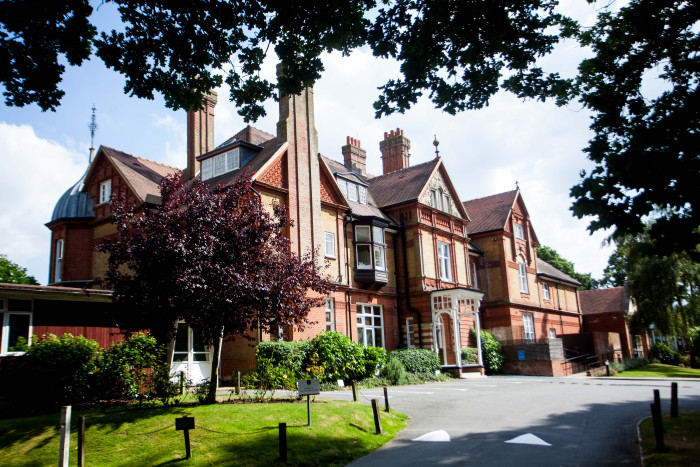
Located in a leafy suburb, the six-acre site is impressive and busy. Original Victorian house is now the admin centre and ‘where the magic happens’ according to a boy who had been to the top floor to count charity money (‘more than I have ever seen before’). In reality, the magic happens pretty much everywhere. An eclectic mix of buildings house rooms that are well-equipped and suited for the wide range of activities on offer. The library deserves a special mention: an incredible space housing over 9,000 books, beautifully presented and organised, which seems designed to make even the least enthusiastic reader feel that immersing himself in a book might actually be an attractive proposition.
Outside, thought has clearly been given to the fact that not all boys want to run around or kick a ball at break times. Yes, there’s a large all-weather surface, but also a quiet playground where pupils can play chess, read or just chat and which doubles up as the area where year 3 grow their sunflowers (an annual competition). There are table tennis tables too. Older boys have their own space in the senior common room (‘the best place’) but time spent here is gently monitored to ensure they do not withdraw from other aspects of school life. Walls, inside and out, carry thoughtful and varied displays. A massive map of the world with a border of different flags dominates a brick wall in the playground – useful information that may be absorbed by osmosis rather than conscious effort.
Well-being is prioritised, kindness is a watchword and boys’ anxieties are dealt with quickly and sensitively. One parent described how staff offered her son a ‘subtle embrace of kindness’ when it was most needed. Sensible mechanisms to ensure information is shared quickly and appropriately. ‘Opening Minds’ lessons are timetabled in years 3 and 4. Boys are taught the vocabulary associated with emotions in order better to understand and articulate their feelings and they are given strategies to help them cope when things are challenging or difficult for them. On Wednesdays, as part of the school’s commitment to the boys’ wellbeing, no homework is given. Meanwhile, Raffy, the therapy dog, is a much loved and exciting addition to the school community, bought in to strengthen the pastoral provision.
The school is hot on sustainability and biodiversity. New pavilion at sports ground (all materials from sustainable sources) incorporates heat pumps and, outside, electric chargers, bat boxes and wild flowers. Sustainability also a priority for school caterers with a bio-digester and compostable ‘plastic’ cups in the dining room notable developments. Boys actively involved: eco-committee and sustainability prefects do more than simply pay lip service to their role.
Shrewsbury House values - respect, perseverance, integrity, compassion and aspiration - permeate everything and the school’s motto, Alto Peto, is also in evidence, reminding pupils to ‘aim high’. Prep schools in this neck of the wood can have something of a reputation as hot houses but this does not feel like one of them, although the curriculum is challenging and rigorous. Mrs Hubbard listened to concerns and scaled back the number of exams in a move supported by all but a handful of parents. Sufficient assessments to ensure that detailed, meaningful data is collected and this is shared with parents, especially during discussions about future schools.
Setting in maths and English from year 4 means that the work is ‘stretching but enjoyable’. The school deliberately sets without informing parents and the various groups are given colours rather than numbers or letters. Some parents inevitably spend time and effort trying to discern where their sons have been placed and the WhatsApp chats ‘go insane’ when the sets are introduced or changed. A few parents feel that ‘the top boys are always pushed’ and ‘the lower ones are well supported’ but perhaps quieter boys in the middle ability range ‘risk slipping through the net.’ This is when the temptation to tutor (very much against the school ethos) can become hard to resist, say some.
An exciting and varied curriculum. Parents told us that boys come home with funny anecdotes about lessons and we found them happy to share details of their learning, whether that was explaining how to gauge proportions with a pencil in the art room or using the Garage Band app in a music lesson (music room walls are adorned with brightly coloured ukuleles - ‘the new recorder; less squeaky’, apparently). One boy was delighted to explain to us his newly acquired understanding of dividing using factors (‘although if you are dividing by a prime number you just have to do it the hard way,’ he warned).
Dismantling and rebuilding computers, programming robots and other exciting practical activities suggest no simple nod to the skills here, this is the real deal. At the same time, it would be hard to imagine not falling in love with history in a room crammed with artefacts: medals, armour, uniforms, flags, standards and weapons (housed in specially built cupboards) and books piled on almost every horizontal surface. The interactive whiteboard looks almost incongruous in a room that is, to all intents and purposes, a museum with desks.
Music is another significant strength with ‘fun’ and ‘inclusive’ again being the most oft-cited attributes of both curricular and extra-curricular provision. Endless opportunities to get involved at all levels and regular concerts and soirées, plus the annual house music competition, provide boys with opportunities to perform in public. Impressively, there are over 200 musical instrument players and groups for all tastes including wind, jazz, brass and strings as well, of course, as the choirs. Drama is varied and complements other areas of the curriculum. All boys take part in a year group production each year and theatre club enables enthusiasts to develop backstage skills.
Design technology room is well equipped and exciting. Boys learn to operate age-appropriate machines which are also used for purposes outside lessons - head’s commendations are engraved on wood using the laser cutter rather than simply being printed on paper.
Senior boys (years 7 and 8), rave about the Discovery Programme, delivered during a double period on Friday. ‘It gives the teachers the chance to share their passions’ explained one. ‘It is incredible’ said another. Photography, battle strategies, ancient Greece, Danish, exploratory science (the discovery of DNA) and ‘Maths in the World’ all feature. One boy explained that they had investigated the idea of building a power plant but they lacked the necessary £800 million of funding to make it feasible. A shame really as they seemed so inspired by the idea.
Less than nine per cent of pupils identified as having a special educational need or disability, addressed by support and adjustments in class when appropriate. Further help may be given via one-to-one sessions as required. In addition, physical adjustments have been made to the school environment to accommodate the needs of individuals.
Plenty of sport, delivered by an inspirational and enthusiastic team. So much so that one parent told us they had concerns when considering the school for a second, less sporty, son. These proved unfounded – ‘So many opportunities: it is inclusive and equitable’. No discrimination in terms of the teaching given to less naturally sporty boys – all are made to feel motivated and valued. The ethos encourages sportsmanship and hospitality as a key component. ‘Results are not the be all and end all any more’. As a member of staff said, ‘Winning feels great, but the nature of the process is even more important.’ Lots on offer apart from core sports, including hockey, rowing, clay-pigeon shooting, athletics, tennis and even sailing. On site space is impressive and there is also a dedicated sports’ ground at Chessington (a couple of miles away) which boasts fantastic facilities and a new pavilion. Only gripe from parents comes from the number of times their sons sometimes need to change between their school uniforms and PE kit during the school day. A swimming pool, practical rather than aesthetic and housed in a structure somewhat akin to a polytunnel, looked like it might get very chilly in the colder months and rather hot in the warmer ones. Boys reassured us, ‘It is actually very snug’ and, when there are swimming galas, ‘the sides retract and it is really amazing’.
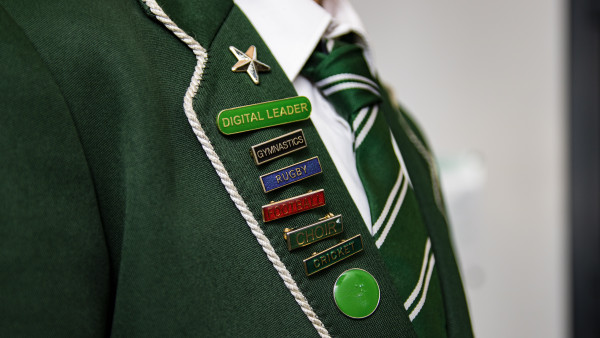
There are lots of opportunities to hold positions of responsibility (music, charity, sustainability, English, head chorister, house captains, younger years prefects, drama, sport etc). Boys who are interested must apply in writing to the head of year 8 and are then interviewed. They take their duties seriously and their voices are heard. Head boys give speeches on open day (‘nobody just wants to hear from me and senior staff’ says head). Personal development for all is ongoing and culminates in an imaginative programme of activities after common entrance with a focus on developing a range of skills, giving the boys an understanding of important issues and making memories. The boys learn sewing and ironing, first aid and self-defence, they are given careers information, and are encouraged to discuss the issues of the day, including sexual violence, black lives matter, consent and domestic violence. The school is ‘no longer just a school for academic, alpha males’ one parent explained. At the end of year 8, boys emerge as well-rounded, kind, articulate individuals, ready for whatever comes next.
Boys are taught the vocabulary associated with emotions in order better to understand and articulate their feelings

The last word
Time has not stood still at Shrewsbury House: the best traditions have been maintained but this is very much a school looking forward, not back. The boys have a genuine sense of pride and are articulate, polite and confident. What appeared to be incomprehensible – that parents living in Fulham would bus their sons to Surbiton and back each day – makes complete sense now. It could be a growing trend.