Advertisement
Select search type
No locations matching your search. Try schools.
Showing results for

No articles matching your search.
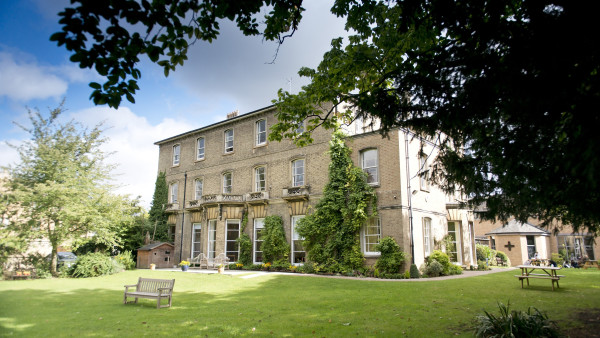
Photo of St John's College School
Reviewed

St John's College School

Independent school · Cambridge, CB3 9AB
  • Primary/prep
  • Co-ed
  • Ages 4-13
  • From £20,214 pa
  • 370 pupils
  • Boarding
  • Choir school
We've reviewed this school • Unlock to access

Academically robust, but without moving into the hothouse territory that some parents feel can be the case with other local preps, St John’s clearly offers great potential for the right children. It blends the traditional prep education with a modern emotions-based ethos.

Why read our school review?

Unlike other websites, schools can't pay to be included in The Good Schools Guide. This means our review of this school is independent, critical and fair, and written with parents' best interests at heart.

Unlock to access
PARTNER GIFT

Spark your child’s love of reading with FREE gifts

Get three months of First News digital for free and £5 off Scholastic books when you read our school reviews.


Overview & data

Pupil numbers
370 ·
Offers boarding
Yes ·
Religion
None
Fees
Day £20,214 - £24,996; Boarding £39,384; Choristers £12,495 pa
Local authority
Cambridgeshire County Council

Headteacher

Head

Mrs Sarah Wright

Since September 2025, Sarah Wright, previously deputy head of Habs Girls. She studied geography and education at Homerton College, Cambridge, followed by a master’s in enquiry-based learning. She was captain of the university netball team, for which


Entrance

Gently selective, with most joining age 4+ via taster day. From year 3, children do a half-day trial including informal English and maths assessments, with school looking for potential over results. For 11+, there are formal English and maths

Open days
October

Exit

Some leave at 11+, usually for local state schools, but vast majority exit at 13+ for independent schools. In 2025 most popular destinations were Perse Upper School, Stephen Perse Foundation, Oundle, The Leys and King’s Ely. Overall, around a third


Latest results

There are no results to show for this school. Find out more.


Teaching & learning

17
Average class sizes

Learning support & SEN

1.98 %
Students with a SEN EHCP
31.36 %
Students with SEN support

Boarders

Twenty spots automatically go to the choristers for whom boarding is obligatory. They join another 20 or so, mostly older, pupils. Weekly/flexi boarding available for the latter. Whilst age 8 is clearly young to fully board, parents of choristers

16
Total boarders
11
Weekly boarders
5
Flexi boarders

Mobile phone policy

A clear mobile phone policy is a really important part of modern schooling. This school has provided us with their policy.

Mobile phone policy

Provided by the school and not part of our review

Children may bring phones to school only to enable them to contact parents/carers or be contacted at the end of the school day. Phones should be switched off and kept in the bottom of their school bag or in their locker. They are not to be used during the day, including during any breaks and are not to be used for any purpose other than for contacting parents/carers. Children are responsible for the safety of their phone and the content on their phone at all times. As an additional safeguarding precaution, our ‘Go Guardian’ filtering system is also able to track children who have logged on using the St John’s College Google address even via 3G and 4G access.

Updated Oct 2025

Pupils

370
Number of pupils

Money matters

Means-tested bursaries available, with the school currently supporting several children with refugee status. However, the school says awards rarely reach 100 per cent and points out that all bursaries are subject to annual renewal. Attempting to

Fee information
Day £20,214 - £24,996; Boarding £39,384; Choristers £12,495 pa

Our view

The school is split into two main sites: Byron House for ages 4-9 and Senior House for ages 9-13. With 460 pupils in total, it is large by prep standards. Each house feels quite separate and with its own character. Byron House has the more lived-in,


The last word

Academically robust, but without moving into the hothouse territory that some parents feel can be the case with other local preps, St John’s clearly offers great potential for the right children. It blends the traditional prep education with a modern


This school has not provided any information yet

If you are from this school, please, get in touch to feature images and useful information for parents.

Contact the school

Address

75 Grange Road
Cambridge
Cambridgeshire
CB3 9AB
Get directions

Have you considered?

Reviewed

King's Ely

Independent school · Ely, CB7 4EW ( miles)
  • All through
  • Co-ed
  • 2-18
  • From £15,661 pa
  • 1,146 pupils
  • Boarding
  • Choir school
School data & information St John's College School 75 Grange Road, Cambridge, Cambridgeshire, CB3 9AB
370 Pupil numbers
226/186 Pupil numbers boy/girls split
16 Total boarders
11 Weekly boarders
5 Flexi boarders
17 Average class sizes

Mobile phone policy

Provided by the school and not part of our review

Children may bring phones to school only to enable them to contact parents/carers or be contacted at the end of the school day. Phones should be switched off and kept in the bottom of their school bag or in their locker. They are not to be used during the day, including during any breaks and are not to be used for any purpose other than for contacting parents/carers. Children are responsible for the safety of their phone and the content on their phone at all times. As an additional safeguarding precaution, our ‘Go Guardian’ filtering system is also able to track children who have logged on using the St John’s College Google address even via 3G and 4G access.

Updated Oct 2025

We do not receive results data for this school. Find out more.

Entry and exit data

Here we report figures on pupils moving between schools at the usual entry and exit points, as well as student destinations into higher education. We publish publically available data for state schools. For independent schools, The Good Schools Guide collects data from its prep schools as to where their pupils go on to. Find out more

Our review contains additional entry and exit data reported to us and is updated annually. See the review

Recent leavers' destinations

SEN overview

St John's College School is a mainstream school. The school may provide support for students with special educational needs as detailed below. If you require more information on conditions the school can support, we encourage you to contact the school directly.

SEN statement

Provided by the school and not part of our review

‘‘Each child is special: each child has needs: each child has special needs. These are truths as old as time, carried in the heart of any parent and any good teacher.’ (K L Jones, Head)

As set out in the school’s Ethos and Aims, we aim ‘to meet the individual needs, foster the aptitudes and nurture the growth of each child.’ In this sense, the school’s Individual Needs provision is part of a wider commitment to helping any child to discover his or her ability. The provisions of SENDA aside, we do not view learning difficulties as disabling but rather as obstacles to fulfilling potential which, with appropriate support, can in many cases be overcome.

This difference of emphasis has significant consequences. It is by no means the case that learning difficulties are experienced only by the less able. Indeed, the problems encountered by the most gifted children can require considerable specialist attention. St John’s is therefore committed to meeting the needs of children who have an identified learning difficulty, whatever their innate ability. It is worthy of note, in this respect, that many children who gain academic awards to their senior schools have, at some point, been given Individual Needs support.

While the Individual Needs department’s Procedure for Referral and Organisation of Provision (PROP) follows the approach recommended by the DfES Special Educational Needs Code of Practice 2001, the school far exceeds any statutory obligations in its approach to identifying and meeting a child’s needs.

St John’s has specialist staff, trained and qualified to assess, recognise and deal with learning problems throughout the age and ability range. We do not have a separate Individual Needs ‘unit’ because the close relationship and constant communication between individual needs and mainstream teachers (many wear both hats) is an essential factor in the early identification and the continuing management of any difficulty. As a consequence, ‘internal’ assessment of children is commonplace when a difficulty has been observed and has been discussed with parents.

In a similar vein, the ‘threshold’ of intervention is much lower than in most schools. The vast majority of children in receipt of support will have very mild or mild specific learning difficulties. For many of these, the provision will be relatively short term, addressing a particular concern at a particular time. For others, support may be needed throughout their time at the school and beyond.

The level of awareness of all staff is very high. There is an ‘Action Plan’ for every child in the school which is constantly updated and formally reviewed and attention to the individual child is a part of the culture. For children with learning difficulties, through specific training and through involvement in framing each child’s Individual Education Plan (IEP), the mainstream teachers are made fully aware of any child’s difficulties and can therefore plan their teaching accordingly. In this respect, all children benefit greatly from the teachers’ awareness of different learning styles, irrespective of whether they have a learning difficulty.

The level of communication with home is, likewise, very high. Parents are informed of any concern, give their permission for any assessment, discuss the outcomes of such assessment in detail with the staff concerned and are fully involved thereafter in the creation and regular updating of a child’s IEP. They meet formally and informally with a child’s Individual Needs teacher to discuss progress and agree action.

The school is able to refer children to a wide range of outside agencies (Educational Psychologists, Speech Therapists, Occupational Therapists, Optometrists, etc) all of whom work in close co-operation with the Individual Needs department. Any such referral is discussed with parents before it goes ahead and the outcome of any assessment is communicated to all mainstream teaching staff.

The effect of a learning difficulty on a child’s self-esteem is of paramount concern. While the identification of a difficulty is naturally a cause for concern to parents, it is almost always a source of comfort to the child. To know that there is a difficulty and that you will be helped to overcome it is a reassuring process and, while children’s self-esteem is very closely monitored and carefully nurtured by the department and by the staff as a whole, being given Individual Needs support is felt as positive by the vast majority of children concerned. It is a matter of pride, in this respect, that our children will talk openly and without embarrassment to prospective parents about their difficulties.

The range of Individual Needs teaching, as outlined below, is wide and will vary according to a child’s needs.

• At Byron House, we offer small group Enrichment English and Mathematics support and Motor Skills Groups free of charge. The School may also provide, free of charge, one Individual Needs lesson in the Pre-Prep. • All Individual Needs tuition in Form 1 and above is charged to parents. • At Senior House, a range of provision is made, free of charge. Enrichment classes in English continue and Spelling and Listening Skills clubs are offered to children who would benefit from the small group support. Small groups of children are also invited to attend Touch Typing classes if their needs warrant this provision. Curriculum support is also available to those who do not study Latin in Forms 4-6. In Form 6, children who would benefit from extra help to develop study skills and examination technique attend short courses in small groups.

The school has a library of laptops for those children who will benefit from their use in the classroom. In due course, some children will move on to home owned laptops. Provision for the use of laptops in examinations is negotiated by the school, as appropriate, with a child’s future school.

EAL The school may admit children for whom English is an Additional Language (EAL) if it deems them able, with appropriate support, to benefit in due course from the mainstream curriculum. Until such a time, individual tuition in English is provided by a specialist teacher in place of mainstream lessons as appropriate. It is a condition of admission that the cost of such tuition and of any necessary assessment charges should be borne by the parents. Such charges will be communicated to parents with the offer of a place.

Timetabling of Individual Needs Lessons The individual needs of each child are taken into account when timetabling lessons. Lessons take place before school, during part of lunchtime or in specified timetable slots which cause the least disruption to mainstream teaching.

Assessment It is the policy of the School that a child requiring individual provision is assessed by one of our specialist assessors, the cost of which, as advised by the Head of Individual Needs, is borne by parents (although the school may be willing to provide financial support, if necessary). Many Senior Schools require an educational psychologist’s assessment prior to entry to confirm examination concessions. Where the School proposes a referral for assessment by an Educational Psychologist for this or other reasons, the cost of a referral is borne by the parents. The Head of Individual Needs makes arrangements for all forms of internal or external assessment of children. In the best interests of the children, parents are expected to share with the school any information arising from external assessments which they have themselves arranged. Where an Individual Needs assessment by the School’s staff or by an outside agency is deemed necessary prior to the offer of a place, parents of potential new entrants should expect to bear the cost of such assessment.

Statutory Assessment As set out in the Special Educational Needs Code of Practice 2001, 7.9: ‘In some cases, schools…. will conclude, after they have taken action to meet the learning difficulties of a child, that the child’s needs remain so substantial that they cannot be met effectively within the resources normally available to the school.’ In such a case, the school has ‘a statutory right to ask the LEA to conduct a statutory assessment ….. of a child’s educational needs’ (Education Act 1996, 329A) which may result in a Statement of Special Educational Needs, as documented in the Code of Practice. In such circumstances, the school undertakes to work in accordance with the Code of Practice and in co-operation with parents, the LEA and other agencies as appropriate, to reach an outcome that is in a child’s best interests. With regard to the admission to the school of a statemented child, the school operates in accordance with its Disability Policy.

09-09

1.98 %
Students with a SEN EHCP UK mainstream school avg. 3%
31.36 %
Students with SEN support UK mainstream school avg. 14.1%

SEN conditons supported

Schools report the conditions they might be able to support. Please note, this may not be a complete list. Find out more.

Conditions (Might cover/be referred to as) Provision
ASD - Autistic Spectrum Disorder Aspergers, Autism, High functioning autism, Neurodivergent, Neurodiversity, Pathological Demand Avoidance (PDA), Social skills Yes
HI - Hearing Impairment
MLD - Moderate Learning Difficulty Learning needs
MSI - Multi-Sensory Impairment Sensory processing
OTH - Other Difficulty/Disability Downs Syndrome, Epilepsy, Genetic, Tics, Tourettes
PD - Physical Disability
PMLD - Profound and Multiple Learning Difficulty Complex needs, Global delay, Global developmental delay
SEMH - Social, Emotional and Mental Health Anxiety, Complex needs, Emotionally based school avoidance (EBSA), Mental Health
SLCN - Speech, Language and Communication Selective mutism
SLD - Severe Learning Difficulty Complex needs
SpLD - Specific Learning Difficulty Attention Deficit Hyperactivity Disorder, Auditory processing, Developmental Co-ordination Difficulties (DCD), Dyscalculia, Dysgraphia, Dyslexia, Dyspraxia, Handwriting Yes
VI - Visual Impairment Special facilities for Visually Impaired
Advertisement