

 Ages
Ages 


Classrooms are tiny (although class sizes are tiny, too), and there is definitely an element of the unusual in the workings of this place, but there is also academic wizardry. Some may hanker after more facilities, but the students lack for nothing when it comes to teaching or encouragement in learning how to learn. It suits a particular type, and that type flourishes at Westminster Tutors.

Why read our school review?
Unlike other websites, schools can't pay to be included in The Good Schools Guide. This means our review of this school is independent, critical and fair, and written with parents' best interests at heart.

Overview & data
- Pupil numbers
- 34 ·
- Sixth form numbers
- 34 ·
- Fees
- £14,950 - £38,400 pa
- Local authority
- Royal Borough of Kensington and Chelsea Council
- School ownership
- David Game College Group

Headteacher
Principal
Sean Doherty BEd MA MBA
Since July 2023, Sean Doherty, previously acting head of school at North Bridge House Canonbury. He has also been assistant principal (assessment) at Harris Academy Bermondsey and head of science at Acland Burghley School. He read secondary education at the University of Alberta in Canada, then gained a master’s in science education at UCL’s Institute of Education and an MBA at Coventry University.
So far, his priorities have been largely administrative – formalising processes and drawing up explicit college aims (‘they were there before, but implicit’) so that WT’s offering is ultimately more streamlined and accountable. ‘Of course, I appreciate our unique, rather bohemian history and more relaxed, bespoke approach that makes us stand out,’ he says, ‘but by dotting the i’s and crossing the t’s, we are now able to demonstrate that we are not quite as laissez-faire as we are sometimes perceived.’
Still, he tears himself away from the office surprisingly often, and is certainly a familiar face to the students as he teaches chemistry, physics and PSHCE, and is a senior tutor (to a third of the students), as well as doing regular student forums. ‘He’s very actively involved.’ Laid back, empathetic and a very good listener, families feel he’s just the right fit for this idiosyncratic establishment where students often arrive with unhappy experiences of more traditional education. ‘I was so impressed with the way he spoke to my son when we first visited – it was clear he completely understood him.’
When time allows, he delights in the art of cooking, studies Italian (preferably in Sardinia) and immerses himself in thought-provoking dystopian literature, such as Margaret Atwood's The Handmaid's Tale – a fitting choice, given his Canadian heritage.
So far, the head’s priorities have been largely administrative – formalising processes and drawing up explicit college aims so that WT’s offering is more streamlined and accountable

Entrance
Maximum capacity of 45 students (this can fluctuate yearly – it was 30 when we visited), of whom, in any given year, around 20 are taking A levels for the first time and the rest are doing retakes. Occasionally, they enrol people in their early 20s who need to take different or extra qualifications for career or further study. Academically non-selective, but students must show aptitude for and commitment to their chosen A level subjects. The majority of the intake is above average academically, but many have found it difficult to succeed in the competitive world of a large, hothouse London day college or have come from another educational system. ‘This was the only option for my son, otherwise he would have flunked out of education altogether,’ one parent told us. All are interviewed by the principal to assess suitability and whether they would thrive in this very individual environment.
They do not typically take students who have been expelled for severe disciplinary breaches or those with significant behavioural issues, but they’re also sympathetic to context: ‘If we feel it was their environment that might have caused the behaviour, and that things could be different here, we might make an exception.’ Applicants need five grade 5s at GCSEs and 6s in their A level subjects.
- Open days
- By request

Exit
Non-selective intake, but vast majority of students get their first choice of university – over three-quarters to Russell Group institutions. Indeed, most people choose the college because they want to successfully transition from A levels to a top university. Most popular 2025 destinations included Exeter, Manchester and Reading. Some to university foundation programmes or degree apprenticeships. Parents say university application and support are outstanding.

Latest results
In 2025, 36 per cent A*/A at A level (61 per cent A*-B).

Teaching & learning
‘The only 1:1 teacher/student ratio college in London that we are aware of,’ says the college, ‘which reflects the Oxford tutorial model. Being bespoke is our unique selling point.’
While most teaching is one-to-one, the college tries to encourage weekly study groups as a ‘halfway house’ so that students get some other interaction. However, it is also fine if a student doesn’t want this – and each cohort tends to be quite different in this regard. ‘This year, the students have really gelled; last year, they were super quiet.’
A wide range of subjects are on offer, from art history to physics and psychology, and the college prides itself on being able to cater for obscure requests. There is a pool of teachers for the more mainstream subjects, and the college endeavours to match pupils with the right teacher for them (which must be a logistical nightmare for the patient and hugely competent college registrar, not least because many of the teachers work elsewhere, too). For any subjects not already offered, WT is happy to headhunt. Again, each cohort varies in its academic leanings – economics was the most popular A level last year; this year, it’s maths and physics. Most take three or four in total, with the retake students usually taking two or three.
Teachers tend to be stars in their fields with a string of letters after their names that would make most of their profession blush. The college recruits mainly by word of mouth and from direct applications, mixing very high-powered people close to retirement (the college has recently hired two teachers in their 60s) or only wanting to work part-time, such as younger artists, musicians, writers and PhD candidates.
Each student has an individual timetable, and the system is immensely flexible. Students praised the teaching and described the teachers as ‘really receptive to feedback; they interact, they don’t just talk at you’. Parents described the teaching as ‘motivational’ and the flexibility ‘fantastic’. One parent said that due to her son’s ADD, he was unable to cope with too much extra stuff, so the college really pared back the timetable for him. ‘Scaffolding a timetable’ was a term we heard a few times both from staff and parents alike.
The net result of this highly individual (in every sense) and carefully monitored approach is results that exceed those of their competitors in the tutorial field and are impressive by any measure. ‘A phenomenal institution for the right person,’ one extremely satisfied parent told us.
Teachers tend to be stars in their fields with a string of letters after their names that would make most of their profession blush

Learning support & SEN
One of the prerequisites for acceptance to the college is that any young person with a mental health issue or an EHCP has to have external support. But WT offers support, too, with the principal acting as the SENCo, closely supported by the part-time pastoral co-ordinator who has an MSc in psychotherapy. Autism, ADHD, dyslexia and SEMH are common and in some cases the needs are quite complex, but this is not a specialist school and it has its limitations. When we reviewed them, for example, the principal was phoning one parent with daily updates – and admitted that wouldn’t be possible for large numbers. ‘We look at our capacity, the cohort we have and the reality of what we can offer. It’s very individual so we can’t make any generalisations.’
Parents tell us the principal is meticulous in studying any SEN related reports – as well as encouraging the family to visit (‘without doing the hard sell,’ as one mother pointed out) – to ensure a good fit and that WT adapts wherever it can, eg through support with executive functioning and social skills. Processes around SEN reviews have been improved, and there are now wellbeing checks (around eg sleep, diet and exercise). Two EHCPs when we visited.

Arts & extracurricular
Art is everywhere (the college’s hallways and staircases look like the interior of a stately home), but this is not an ‘arty’ college – pictures come from the personal collection of David Game (of the David Game Group – a consortium of private colleges). However, art classes can be part of a pupil’s bespoke curriculum if this is a subject they are interested in, and there is an in-house part-time art teacher/art historian who also teaches for the University of Arts London.
Art, science and English tutorials often include lessons in the real world of art galleries, museums, and lectures (the location helps—being in the hub of all things cultural). Students can also access the larger premises of the affiliated David Game College in Aldgate: ‘We have had students who have guitar and drum lessons up the road, and others who have film nights there as part of their course.’ Students can also be involved in David Game College productions there if they so wish.
The bottom line is that students don’t feel like they are missing out. As one told us, ‘I didn’t come here to be involved in college productions or orchestras, I knew it was a small, personalised place and to be fair, I had made many of my friends before coming here so didn’t feel the need for that.’ Another added, ‘We do have extracurricular activities like ice skating and outings, but it is much less of a sensory overload than my last college, which I like.’
There are regular guest speakers, some from industry.
‘We have students who have guitar and drum lessons up the road, and others who have film nights there as part of their course’

Sport
Bearing in mind that the college is above a row of shops in central London with no outside space and that the 40-odd students are not all here on a daily basis, it will not come as a surprise that sports do not feature as a significant part of the curriculum. Staff and students play a friendly round of football, netball, and rounders semi-competitively every year for the Westminster Tutors Cup. Other sports are available in competition with local sixth-form colleges as part of the CIFE group of colleges or through their membership of the Independent Schools Association. For the very adventurous, there is yoga ‘with cats’ offered at their affiliated college (yup, that’s what we heard, and we didn’t question further!). In the past, WT tried to arrange gym sessions with individual programmes designed for students, but it wasn’t exactly a hit, most students telling the principal that they already had private gym memberships! It’s worth noting that some students are professional and semi-professional athletes, eg golfers, as the flexible timetable works well with their sporting obligations.

Ethos & heritage
One of the oldest tutorial establishments in the country, Westminster Tutors was founded in 1934 ‘by the doughty Miss Freeston’, who studied physics at St Hilda’s College, Oxford, and was one of the first women to graduate from Oxford University. It was her mission to get bright, if lost, teenage girls into Oxbridge, as she realised that young women had very little chance of securing a place at Oxford and Cambridge ‘because they lacked access to academic teachers who could help them prepare for the rigorous entrance exams’.
Miss Freeston’s legendary establishment was a smoke-filled den in Artillery Row in Westminster, with the likes of novelists AS Byatt and Penelope Fitzgerald (both former teachers too) squished together on hairy, sagging sofas amid ‘a rich and pervasive smell of old upholstery and decaying dogs’. A whiff of that anti-establishment reputation still lingers at this quirky, very un-collegey establishment, now in the heart of South Kensington (not Westminster at all!).
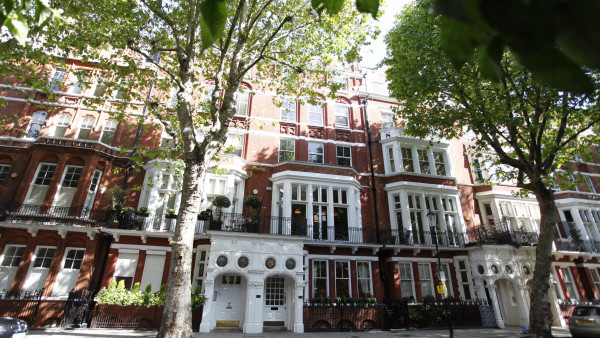
We visited on a beautiful early autumn day and there was a palpable buzz in the air around Sloanesville. We didn’t know what to expect of the college as we walked down the Old Brompton Road, with countless coffee shops and mouthwatering eateries, which the pupils love. What we didn’t expect was a small, unobtrusive doorway tucked next to a shop, with a narrow and modest hallway leading straight up a flight of stairs.
Yet this building (which is more rabbit warren than conventional educational space) could be a metaphor for the college itself, which is modest in stature but allows its results to do all the talking. Its charm might not be immediately obvious to a parent looking for a polished, modern environment with wide open spaces. Still, the bright, warm ambience created by the staff and the cosy main reception area are enough to win over the harshest critics. ‘We now even have a proper dedicated science space with a fume cupboard,’ say staff (formerly science experiments took place in a galley kitchen). No canteen, but no complaints – students prefer the idea of all that choice on Old Brompton Road anyway (Tesco Metro is still the most popular).
In October 2022 Ofsted downgraded Westminster Tutors from ‘outstanding’ to ‘inadequate’ and while the college admitted this was ‘a big wake-up call’, there is a consensus among many that Ofsted’s benchmarks never aligned with WT’s less conventional model. Proven, in fact, in November 2024 by ISI (which has now taken over as WT’s inspectorate) finding WT to have exceeded expectations for its quality of education and to be excellent in all categories.
Founded in
The bright, warm ambience created by both staff and the cosy main reception area are enough to win over the harshest of critics

Pastoral care, inclusivity & discipline
Second to none at Westminster Tutors, and the reason many parents chose this place over others. One parent told us that when her son was feeling very overwhelmed about his exams, the previous head spotted him and said, ‘Why don’t you come in and let you and me talk about The Tempest?’ Others voiced similar thoughts and said that the college has really opened up their child’s mind about things, to the point where they will come home and start a debate: ‘One of the massive benefits of a college this size.’
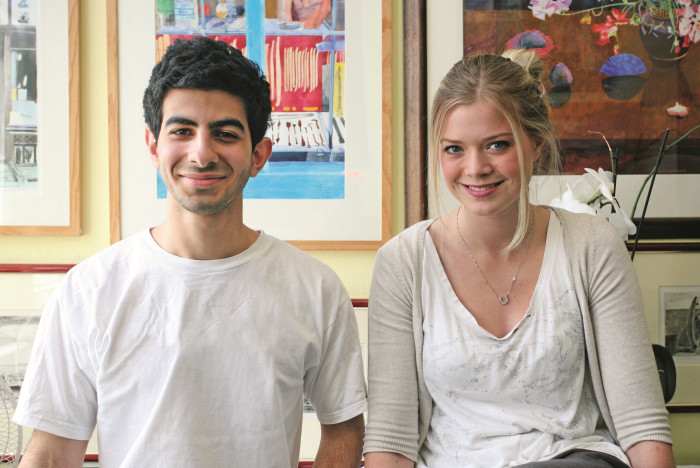
Pupils, many of whom couldn’t function healthily in a larger college environment (and, as a result, missed out on large chunks of their education), are kind and understanding of each other’s space. Some pupils come in just for individual tutoring and then go home with minimal interaction, while others are happier to mingle in the common room and chat over tea and biscuits. Bullying of any sort would just not be tolerated (we can’t even imagine it happening), and the college is too small for it to go unnoticed anyway. Weekly PSHCE lessons enable WT to be proactive pastorally, and pupils also get weekly mentoring sessions – this isn’t just lip service, but an hour a week of proper personalised support.
Very much the sense that young people are treated like adults: ‘They really listen to us here. If we don’t like a teacher, they take this on board and will try and accommodate as much as possible,’ said one student, but was quick to add, ‘but this doesn’t happen very often.’ One parent commented, ‘There is no stress about the wrong kit here, etc. They can focus on the important things.’
Students know that they can go to any staff member if they require help or support and are confident that staff will deal promptly with any concerns. Several parents remarked on the quick response they received if they contacted the college. The only hard and fast rules are about attendance and safety, which are seldom problematic.
There are those pupils who come in just for their individual tutoring and then go home with only minimal interaction, while others are happier to mingle in the common room

Mobile phone policy
A clear mobile phone policy is a really important part of modern schooling. This school has provided us with their policy.
Mobile phone policy
 Provided by the school and not part of our review
 As we are sixth form college, students may use their mobile phones on site but are asked to refrain from using them in lessons.

Pupils & parents
All are British residents, with all the cultural diversity you’d expect in the heart of London. Over half of the enrolments are by word of mouth; former teachers in other colleges have recommended a few, and a few alumni have sent their children here, wanting them to have the same experience they had. A smattering of offspring are from well-known names in showbiz and high-ranking ministerial positions (Helena Bonham Carter and Anna Wintour are former students).
The intake tends to come from a mixture of top public colleges and London state colleges, plus a few working young people, such as models and actors, as the adaptable teaching provision means they can arrange it around their jobs.
There is no apparent archetypal parent, although most tend to be successful in their fields or professions. It is not just an option for the super wealthy as some pupils only need to attend for a year to get back on track or be helped into a top university.

Money matters
It is inevitably not a cheap option, but compared to alternatives with larger classes, it offers value for money. The college says that, given the individualised tuition it offers, it is incomparable to its contemporaries. However, they add that providing bursaries in the future is high on their list of priorities.
- Fee information
- £14,950 - £38,400 pa

The last word
Classrooms are tiny (although class sizes are tiny, too), and there is definitely an element of the unusual in the workings of this place, but there is also academic wizardry. Some may hanker after more facilities, but the students lack for nothing when it comes to teaching or encouragement in learning how to learn. It suits a particular type, and that type flourishes at Westminster Tutors.