11+ revision courses

11+ revision courses – what should I expect?
Usually aimed at pupils in years 5 and 6, these booster courses – also known as ‘workshops’ and ‘crash courses’ – usually take place at a local venue after school, at weekends or during school holidays. The objective is to prepare children for the 11+ assessments which children sit in order to get a place at grammar school or academically selective private school.
While some firms also offer mock interviews and practice exams, much of it is down to the nitty gritty of exam practice.
The best ones have small classes (we advise no more than around 12, though some are much bigger), effective differentiation, well thought out and engaging course material (some firms develop their own resources), high teacher to pupil ratios and lots of detailed feedback. If any of this isn’t made clear before you sign up, be sure to ask.
Who offers them?
Some companies, such as Teachitright, specialise in 11+ revision courses – in their case, running groups of up to 11 children in 16 centres (schools, community centres and libraries) across Berkshire, Buckinghamshire and Surrey – and there’s a franchise in Birmingham too. Others, such as Enjoy Education, are primarily tutor agencies but run exam revision courses as extras. See our tutor company reviews for more examples.
Some course organisers make a big deal out of their expertise in prepping for specific highly selective schools, both independent and maintained, from Latymer Upper to The Henrietta Barnett School, where around 3,000+ apply for 100 year 7 places.
But you’ll find 11+ courses advertised all around the country, from Edinburgh to Manchester and Birmingham to Cheam – anywhere, in fact, where unbounded parental aspiration meets limited school places.
Are 11+ revision courses any good?
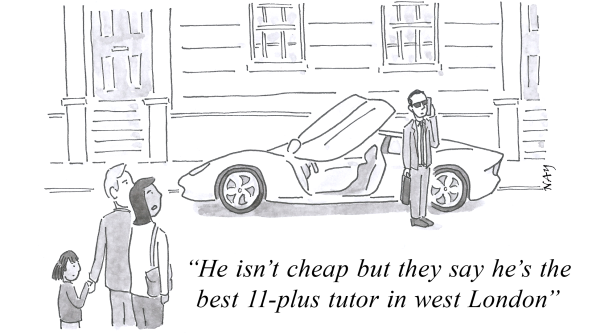
It all depends who you’re talking to. Cynics argue that 11+ courses are, first and foremost, a brilliant money making wheeze that relies on ramping up – and monetising - parental anxiety levels.
Even some in the business agree. We’ve heard tutor agencies compare them to puppy farms where they cram in as many kids as possible, begging the question, why bother?
But others disagree, claiming it can really help to be exposed to a different way of teaching and look at things in a slightly different way – not to mention the fact that most children will never have seen a non-verbal reasoning paper in their life and will surely benefit from practice.
Confidence levels can be improved and exam technique buffed up, they add, which won’t go amiss even for the brightest of the bright. If they see an exam question they didn’t expect, that extra confidence can help them deal with it.
Classes can work particularly well for the outliers, believe some tutor agencies – like bright and motivated pupils who are being held back by lower ability pupils in their class, or children who are struggling and could benefit hugely from a slug of individual attention.
Some parents say these courses are a way of removing stress from the revision process – and that their children enjoy them, seeing them as another club.
Is it right for your child?
Don’t sign up just because all your child’s friends have and you’re suffering FOMO. Do sign up if there’s likely to be a clear benefit.
Reputable firms will give you an honest opinion on your child’s chances of success before taking your cash. If they don’t think they’re up to it, they may even turn you away. See this as a good thing, saving you a lot of heartache further down the line.