


 Ages
Ages 


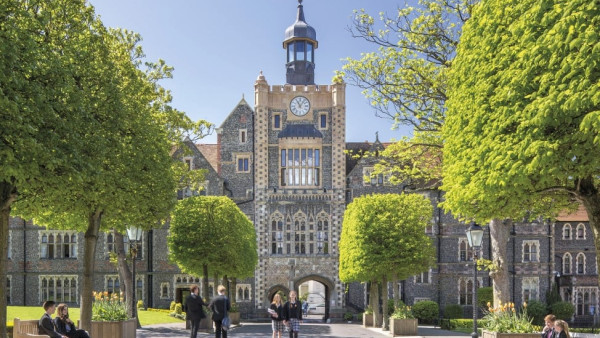
‘Academic aspiration’ and ‘challenge’ are words that have long been associated with RGS, endorsed by pupils’ impressive academic results. Increasingly being heard alongside these are now ‘support’, ‘well-being’ and ‘pastoral care’. Parents and older students commented on a perceptible shift in priorities. RGS is successfully maintaining academic challenge while developing pastoral strengths to complement its provision. The result is a school which values the whole child and the only ‘hothouse environment’ left is the glass-heavy new buildings.

Why read our school review?
Unlike other websites, schools can't pay to be included in The Good Schools Guide. This means our review of this school is independent, critical and fair, and written with parents' best interests at heart.
Unlock to access

Overview & data
- Pupil numbers
- 1,335 ·
- Sixth form numbers
- 332 ·
- Religion
- None
- Fees
- £20,016 pa
- Local authority
- Newcastle-upon-Tyne City Council
- Linked schools

Headteacher
Headmaster
Geoffrey Stanford
Since 2019, Geoffrey Stanford. Originally appointed on a temporary basis, he clearly made an impression in his baptism of fire during Covid and was quickly made permanent. Educated at Eton, recipient of an Oppidan scholarship, progressed to St Hugh’s

Entrance
Highly competitive entrance process; head says the school is ‘unashamedly academic’. Normally around 72 from the junior school and the same from outside. Incomers take tests in verbal, non-verbal and maths. A shortlisted group then attends a full day
- Open days
- November

Exit
Those who leave at 16 are either opting for boarding or vocational courses. Post A levels, it’s Russell group universities for the vast majority, a few do gap years and one or two take up apprenticeships. Top five universities for sixth form leavers

Latest results
In 2025, 81 per cent 9-7 at GCSE; 63 per cent A*/A at A level (86 per cent A*-B). In 2024, 86 per cent 9-7 at GCSE; 71 per cent A*/A at A level (91 per cent A*-B).
A levels or equivalent - Average points score (2024)
What is this?
These figures tell you the average grade and average points that pupils achieved in their academic qualifications. A maximum of 60 points are available for a grade A* at A level.

Teaching & learning
Staff, parents and pupils all speak with a unified voice on one matter: pupils ‘have to be academic’ and there is ‘challenge’ and pressure. The ‘very highly selective’ entry system also places demands on staff. Parents are confident that they rise to
- Qualifications taken in 2024
- A level
- EPQ
- GCSE

Learning support & SEN
Pupils with SEND are catered for through a combination of staff training and TAs, with five in the senior school. Around 100 students on the SEND register across the full range of needs with communication and language issues the majority. Staff aim

Arts & extracurricular
The new art block is impressively adorned with high quality work from all stages and in various forms. The layout provides light and space and pupils are given a lot of autonomy to develop their skills. Music has also seen its resources expanded with

Sport
Sport is ingrained in the wood panelling at RGS. Female director of sport oversees flourishing participation in rugby, squash, netball, football, fencing, hockey, basketball, gymnastics, cross country, riding and swimming. Given the spatial

Ethos & heritage
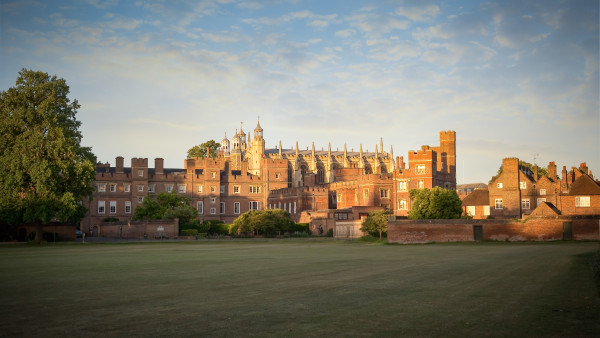
Since its foundation in 1525, RGS has moved five times, landing on its current site in the affluent area of Jesmond in 1906. Boys only until 2001 when girls joined the sixth form and fully co-ed since 2008; bit awkward with Newcastle School for Girls

Pastoral care, inclusivity & discipline
Parents are encouraged to talk to staff over any concerns and many felt there had been a shift in the attention paid to pastoral care in recent years, including a focus on wellbeing. Two school counsellors and a nurse provide support to students. A

Mobile phone policy
A clear mobile phone policy is a really important part of modern schooling. This school has provided us with their policy.
Mobile phone policy
 Provided by the school and not part of our review
 Students must not use their phone (without permission from a member of staff) at any point during the school day once they cross the threshold into school, regardless of the time of arrival, and until they leave the school site. Sixth form students are granted the privilege of using their mobile phone in the sixth form common room. These restrictions apply to all school-related events, including co-curricular activities, after school supervision and off-site school events and trips.

Pupils & parents
Pupils relish the challenges of what they see as ‘the pressure of an academically challenging school’. They value the sense of community and support each other, while also being competitive. Sounds like a delicate balancing act, but pupils manage it

Money matters
Head wants the school to be ‘inclusive’ and fees are kept as low as possible, competitive with others in the area. There are also means-tested 84 bursaries, all of which are based on academic attainment and are ‘largely fully funded’. Some sixth form
- Fee information
- £20,016 pa

The last word
‘Academic aspiration’ and ‘challenge’ are words that have long been associated with RGS, endorsed by pupils’ impressive academic results. Increasingly being heard alongside these are now ‘support’, ‘well-being’ and ‘pastoral care’. Parents and older