Who really gets private school bursaries – and should you apply?

Over the past year, private schools handed out £1.1 billion worth of scholarships and bursaries to 156,000 pupils – that’s about 30 per cent of all children in private schools.
30 % of private school pupils receive some form of fee assistance
Half of all this money comes in the form of means-tested fee assistance, namely bursaries. Scholarships – more on scholarships here – require the child to demonstrate excellence in sport, performing arts, art or academics and are rarely means-tested. These days they are often nominal and tend only to offer small discounts on fees. Bursaries, however, are allocated according to the applicant family’s financial situation.
How private school bursary assessments work
The families of the 37,000 children currently receiving bursaries would have undergone a thorough financial investigation by the school or their appointed auditors. Income is assessed, property investigated and assets scrutinised. It should be meticulous – schools don’t want to give funds to people who don’t need it – but fair.
Schools look at the whole picture. Unavoidable financial commitments such as maintaining elderly parents in a care home or the expenses incurred by a disabled family member, for example, should be taken into account, but the school needs to be certain that potential beneficiaries are worthy ones.
This cross-examination is endured by families in the hope that it will result in an offer of reduced school fees. Some would be delighted by a 5 per cent reduction; others could accept nothing less than 100 per cent.
Who is most likely to receive a private school bursary?
Providing it has the resources – worth mentioning that not all do – a school can give a bursary to any child they deem deserving. Usually, the school operates as a charity and this charitable status is dependent on ongoing charitable activities. Look up these schools with the Charity Commission and you will see phrases in mission statements like ‘widening access’, ‘the advancement of education’ and ‘the provision of financial assistance.’
It may seem unlikely given their present-day largesse, but many of the more famous private schools owe their existence to their charitable beginnings. Eton College was founded by King Henry VI in 1441 to educate ‘seventy poor boys’ free of charge. Winchester College had similar beginnings 50 years earlier, courtesy of the local bishop, and many other schools first opened their doors thanks to endowments from rich merchants, nobility and the church.
Clearly much has changed in the intervening centuries. Nowadays, in the age of compulsory education, these schools offer an elite education for a small minority of children – and only a few of those get it for free. It is no surprise that their charitable status is controversial for some, but the schools assert that as long as they provide free and subsidised places to deserving candidates (as well as the work done in the community and with local state schools), they are more than justifying their charitable status.
In theory, your child doesn’t need to be exceptionally bright, a great athlete or a brilliant artist or musician to receive a bursary; they only need to be able to match the level and expectations of the school. But the reality is often that competition for bursaries is so high that it is the exceptional applicants who are awarded the money.
Household income thresholds in 2025
In 2025, what do your family finances have to look like to be considered for bursary money? Most schools keep their cards fairly close to their chest on this one and each will have different criteria with some year-to-year elasticity depending on the range of applicants and their needs.
Schools publishing their bursary income thresholds
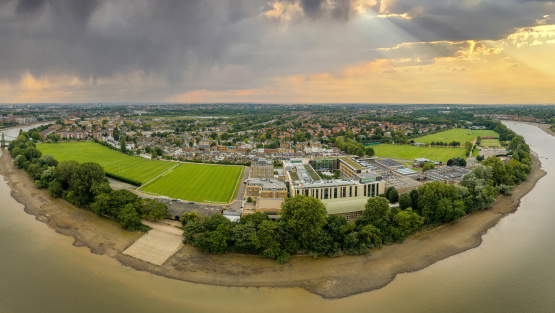
St Paul’s School, a London boys’ school ever-present at the top of league tables, took the unusual step a few years ago of publicly declaring the household income threshold at which it would consider bursary applications. In 2025, an income up to £144,000 may result in eligibility for some kind of bursary. Families with an income below £78,000 may be eligible for an award of 100 per cent of fees.
Doctors, teachers and civil servants were once the backbone of school communities, but many have been priced out without bursary support.”
A clutch of nearby schools followed with their own similar announcements. This surprised many because clearly, it’s hard to justify charitable help for families in the top half of that income bracket. The schools explained it was warranted due to the extortionate costs of living in London and that, if a child was a good fit for their school, they wanted to lend a hand.
Doctors, teachers and civil servants were once the backbone of school communities, but many have been priced out without bursary support. Bursaries aimed at these professional families would go some way to redress this balance and save the school from a clientele comprising only the super-rich and a minority of low-income families.
It would seem unlikely that St Paul’s, St Paul’s Girls (who put the income threshold at £140,000 for bursary eligibility), Latymer Upper (no strict thresholds but give £135,000 as a ballpark figure) et al would offer such a middle-income family a 100 per cent bursary but, if offering a small reduction makes it financially manageable, they are willing to help bridge the gap.
The respective numbers outside London reflect the cheaper cost of living and property, as well as lower average salaries. Manchester Grammar School states that a family with a total household income below £58,500 may be eligible for bursarial support. Exeter School says that to be considered for a bursary, ‘gross parental income will need to be below £70,000 per annum.’
As most schools do not publish their means-testing income thresholds, the examples above can, broadly speaking, act as bellwethers for parents trying to gauge what might be available at other, similar schools.
Why small bursaries matter for many families
Further indications that schools are keen to help middle-income families can be seen in the latest ISC data. More than 20 per cent of all bursary recipients received no more than 25 per cent off the fees. The message we take from this is that there are plenty of families who might otherwise be considered fairly well-off receiving that little bit of help to pay school fees.
Therefore, it’s reasonable to suggest that if you want your child to attend private school but know the costs could be a struggle, ask yourself whether a small reduction in fees would make it manageable. If the answer is yes, ask your preferred schools what bursarial support they may have available – you’ll know deep down if you’re an improbable candidate for a top whack bursary but you won’t be offered a penny without applying.
Full bursaries and 110% awards – how rare are they?
Some schools reserve their funds almost entirely for large awards – not just a bursary that lightens the load but something that transforms a child's life.
The Girls’ Day School Trust, a 150-year-old foundation which runs a group of top independent girls’ schools, states on its website that its bursaries ‘offer life-changing opportunities to girls who wouldn’t otherwise have access to a GDST education.’
At this end of the scale, the ‘life-changing’ bursaries tend to mean 100 per cent or 100+ per cent (sometimes qualified as ‘110 per cent’ because of the additional money for uniform and transport). In 2025, 7,245 children benefitted from one of these. That’s just 1.3 per cent of all children currently attending private school and the majority of those are at large senior schools. These bursaries are like hen’s teeth, but again, if you don’t ask, you won’t get.
Another route to such a golden ticket is The Royal National Children’s SpringBoard Foundation which works with schools, local authorities and community groups to match children with schools offering big bursaries. Its work truly is transformative and life-changing.
Is it worth applying for a private school bursary?
Schools want to put their bursary funds to good use and they know that maintaining a diverse pupil population is important to their future success. There’s no guarantee you’ll bag that bursary you want, but schools are investing more money each year into their funds and will do their best to help deserving candidates.
And crucially, you won’t be offered a penny without applying.