

 Ages
Ages 


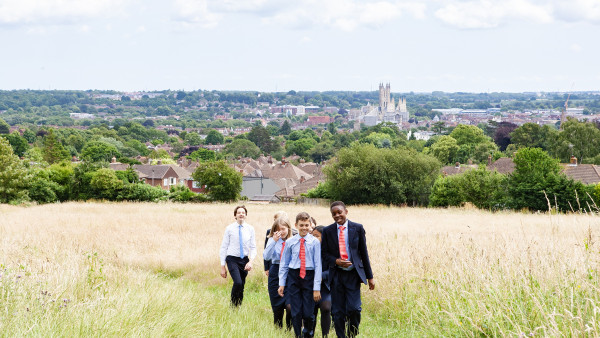
A school that has upped its game in recent years. Particularly strong on pastoral care, with children telling us they feel safe and well cared for, while its relatively small size means that children are can progress at their own pace. Ultimately, it’s about doing your best, whether it is in the classroom, the stage, the art room or the sports field. The school motto, ‘Be all you can be’, sums it up nicely.

Why read our school review?
Unlike other websites, schools can't pay to be included in The Good Schools Guide. This means our review of this school is independent, critical and fair, and written with parents' best interests at heart.
Unlock to access

Overview & data
- Pupil numbers
- 544 ·
- Sixth form numbers
- 129 ·
- Offers boarding
- Yes ·
- Religion
- C of E
- Fees
- Day £13,587 - £29,619; Boarding £37,575 - £54,144, Choristers £34,227 pa
- Local authority
- Kent County Council
- Area guides

Headteacher
Head of school
Ed O’Connor
Since 2018, Ed O’Connor, previously deputy head since 2013. Welcoming and likeable. Read history at Peterhouse, Cambridge followed by a master’s in international relations at Oxford. Spent five years in investment banking before deciding that

Entrance
From local primaries and prep schools such as Spring Grove, Northbourne Park, Lorenden and Wellesley House and sometimes from the grammar schools at 13+. Some join the nursery at the age of 2 but main intakes into years 3, 7 and 9 and the sixth form
- Open days
- October

Exit
Around five move elsewhere after the prep – and a small number after GCSEs – usually to local state schools. Almost all go on to university with about half to Russell Group to read anything from maths, history and law to agriculture and international

Latest results
In 2025, 35 per cent 9-7 at GCSE; 30 per cent A*/A at A level (59 per cent A*-B).
A levels or equivalent - Average points score (2024)
What is this?
These figures tell you the average grade and average points that pupils achieved in their academic qualifications. A maximum of 60 points are available for a grade A* at A level.

Teaching & learning
The school caters for all abilities and children are stretched to achieve their best, whatever that may be, and no one is expected to fit into a mould. The headmaster has upped the academic ante and university destinations are increasingly ambitious.
- Qualifications taken in 2024
- A level
- EPQ
- GCSE

Learning support & SEN
Two full-time members of staff and a director of learning enhancement monitor all students with additional needs. Problems are identified early and staff work closely with subject teachers to ensure the right support is in place – could be either one

Arts & extracurricular
The excellent music, art and drama provision is the reason that many parents choose St Ed’s and almost all children get involved in it in some form or another.
Music has been at the heart of the school since its foundation and the cathedral

Sport
Sport for all and sport for fun with all the usual team sports except rugby. The school has started an elite athlete development programme for the most able and is flexible with the timetable to fit in training sessions. School is supportive of

Boarders
About 80 full boarders from 20 different countries as well as a number of weekly and flexi boarders. About a quarter are British ex-pats and Gurkhas. Occasional boarders are welcome if there is space – useful for parents who have to travel for

Ethos & heritage
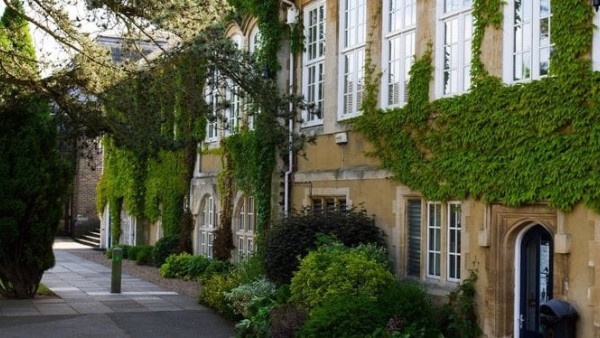
St Edmund’s was established in Yorkshire 1749 as the Clergy Orphan School and following a move to London, it settled in Canterbury in 1855. It is centred around the original School House, a monument to high Victorian exuberance with chapel attached.

Pastoral care, inclusivity & discipline
‘The school does pastoral care to perfection,’ said a parent, and everyone else we spoke to agreed. ‘Pastoral care is the bedrock of a successful education,’ reckons the head, ‘and if a child is happy everything else follows.’ Each pupil has a

Mobile phone policy
A clear mobile phone policy is a really important part of modern schooling. This school has provided us with their policy.
Mobile phone policy
 Provided by the school and not part of our review
 During the working day, you may use mobile phones but only in common rooms, studies or boarding accommodation. They must be switched off during lessons, at ‘lights-out’ and in the medical centre. They may not be used in classrooms. All pupils should have their mobile phone security marked. To increase security, we also ask that pupils log their mobile phone numbers with their housemaster or houseparent. Mobile phones that are used in contravention of the rules will be confiscated and lodged with the school office for later collection.

Pupils & parents
St Ed’s attracts creative and arty families, many of whom run their own businesses or work for the university. ‘Hardworking middles’ was how one parent described them and many make great sacrifices to send their children here. They are generally very

Money matters
Academic, art, drama, music and sports scholarships of varying values as well as a small number of means-tested bursaries for new and existing families. Twenty-five per cent discount to children of clergy and employees of Dean and Chapter of
- Fee information
- Day £13,587 - £29,619; Boarding £37,575 - £54,144, Choristers £34,227 pa

The last word
A school that has upped its game in recent years. Particularly strong on pastoral care, with children telling us they feel safe and well cared for, while its relatively small size means that children are can progress at their own pace. Ultimately,